
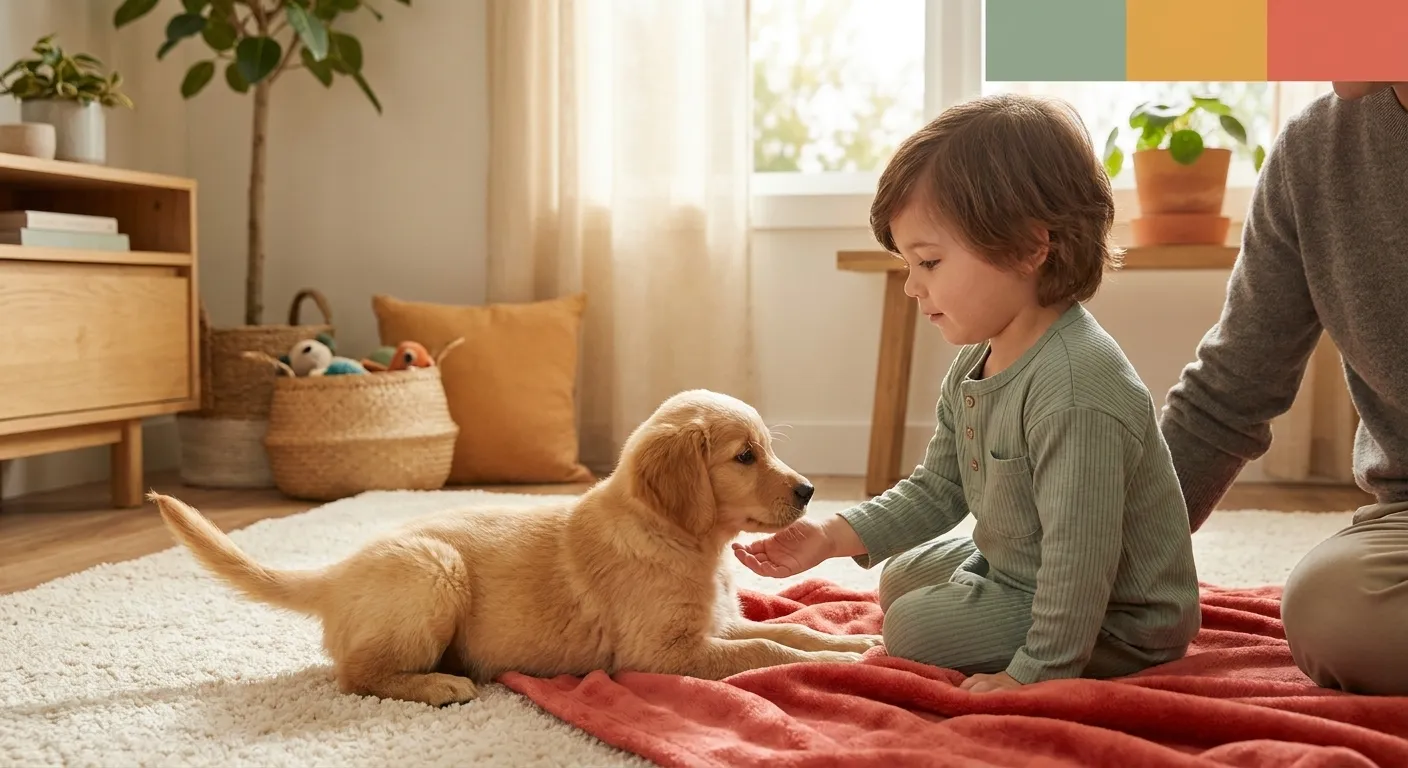
Bringing a new puppy into a home with children is an exciting time, but it also requires careful planning to ensure puppy kids safe interactions. For first-time pet parents and busy families, creating a harmonious environment where both puppy and children feel safe and respected is key. This isn’t just about preventing nips; it’s about fostering positive relationships and teaching responsible pet ownership from a young age. Let’s explore how to set everyone up for success.
Setting the Stage for Positive Puppy-Child Engagements
Supervision is paramount. Never leave a puppy and young children unattended, even for a moment. This is a golden rule for a reason; it helps prevent misunderstandings and ensures everyone’s safety. Teach children gentle ways to interact with the puppy. For example, show them how to pet softly, not grab, and how to approach calmly, not running. Furthermore, it’s crucial to explain when to give the puppy space, especially when eating, sleeping, or in their crate. Remind them that the puppy is not a toy and has feelings. You can use analogies that children understand, like how they wouldn’t like to be pulled or poked. Always reward both the puppy and the child for calm, positive interactions. Consequently, this reinforces good behavior for everyone involved.
Creating designated safe zones for your puppy is incredibly helpful. A crate, a specific bed, or even a playpen can serve as a sanctuary where your puppy can retreat when they feel overwhelmed or need a nap. It is vital to teach children that this is the puppy’s private space and they should not disturb them there. In fact, understanding the importance of puppy naps for healthy growth can help children appreciate why their furry friend needs undisturbed rest. Moreover, this teaches children respect for boundaries and the puppy’s need for quiet time. By establishing these clear rules early on, you are building a foundation for respectful coexistence.
Teaching Respect and Boundaries for Both Sides
It’s a two-way street. Just as children need to learn how to treat a puppy, the puppy needs to learn how to interact with children. Teach your puppy gentle play behaviors. If they mouth or jump, redirect their attention to appropriate toys. This is a crucial step in preventing unwanted behaviors. Establish clear boundaries, such as no jumping on children or grabbing clothes. For instance, you might use a firm but gentle ‘no’ and immediately offer a chew toy when your puppy tries to mouth. In addition, involving children in positive reinforcement training, like asking the puppy to ‘sit’ for a treat, empowers them and helps the puppy associate children with good things. This also helps build confident puppy manners, making interactions smoother.
Consider enrolling in a puppy class or seeking guidance from a professional dog trainer. They can offer tailored advice and help you address specific challenges. Furthermore, consistent training and socialization during your puppy’s critical socialization period are essential for them to grow into a well-adjusted adult dog. For more insights on this, you can refer to resources on understanding puppy’s critical socialization period. Ultimately, a well-socialized puppy is more likely to engage in gentle interactions with everyone in the family, including children.
Understanding Puppy Body Language: A Key to Safe Interactions
Learning to read your puppy’s body language is a powerful tool for preventing problems and ensuring positive encounters. Puppies communicate their feelings through their posture, tail wags, ear position, and even their eyes. For instance, a tucked tail, flattened ears, or yawning can signal that your puppy is feeling anxious or uncomfortable. On the other hand, a relaxed posture, loose tail wag, and soft eyes usually indicate a happy and receptive puppy. Teaching children these cues can empower them to understand when their puppy needs space or is ready to play. This understanding is vital for fostering gentle puppy-child interactions. When children recognize these signs, they can respond appropriately, thus preventing potential nips or fearful reactions from the puppy.
It’s important to educate children about respecting the puppy’s signals. For example, if a puppy walks away or hides, children should be taught to let them be. Similarly, if a puppy is growling or showing teeth, it is a clear warning sign that should be immediately respected. Never punish a puppy for growling; instead, identify the cause and manage the situation. According to the ASPCA, understanding dog body language is fundamental for responsible pet ownership. Therefore, making this a family learning experience will greatly contribute to a safe and harmonious home. Moreover, this knowledge helps everyone in the family contribute to successful puppy kids safe interactions.
Enrichment and Exercise for a Balanced Puppy
A well-exercised and mentally stimulated puppy is generally a calmer puppy, making them less prone to destructive behaviors or excessive energy during interactions with children. Ensure your puppy gets enough physical activity appropriate for their age and breed. This might include structured walks, playtime in a secure yard, or engaging in puppy-friendly games. Mental enrichment is equally important. Puzzle toys, training sessions, and interactive games can help tire out your puppy’s mind. For example, teaching your puppy new tricks not only provides mental stimulation but also strengthens their bond with family members. This also creates more opportunities for positive puppy-child engagements. Consider exploring budget-friendly puppy enrichment ideas to keep your pup happy and engaged without breaking the bank.
Remember that a tired puppy is a good puppy. When puppies have outlets for their natural behaviors, they are less likely to express their energy in ways that might be overwhelming for children. Therefore, consistent exercise and enrichment are not just good for your puppy’s overall well-being; they directly contribute to fostering positive interactions between your puppy and children. This proactive approach helps maintain a peaceful household. Furthermore, it reduces the likelihood of stressful situations, ensuring more delightful puppy kids safe interactions.
Consistent Training and Socialization for Harmony
Consistency is the cornerstone of successful puppy training. Everyone in the family, including older children, should use the same commands and reward systems. This prevents confusion for the puppy and ensures they understand what is expected of them. Basic obedience commands like ‘sit,’ ‘stay,’ ‘come,’ and ‘leave it’ are invaluable for managing interactions with children. For instance, ‘leave it’ can be incredibly useful if your puppy tries to grab a child’s toy. Regular training sessions, even short ones, reinforce these behaviors. Moreover, positive reinforcement builds a strong, trusting relationship between your puppy and family members. This strong bond is essential for establishing safe interactions between your puppy and children.
Socialization goes beyond just meeting other dogs; it includes positive exposure to various people, sights, sounds, and experiences. Introduce your puppy to a variety of children in a controlled and positive manner. Always supervise these introductions closely, ensuring they are brief and positive. Reward calm behavior from both the puppy and the children. This helps your puppy develop confidence and good social skills. For guidance on safely introducing your puppy to new people and places, you can consult resources like introducing your puppy to new people and places safely. A well-socialized puppy is more likely to be calm and adaptable, making puppy kids safe interactions a natural part of your family life. The American Veterinary Society of Animal Behavior (AVSAB) emphasizes the importance of early socialization for preventing behavior problems, highlighting its role in ensuring harmonious coexistence in homes with children. You can find more information on their official website: AVSAB Position Statements.
Building a Lifetime of Friendship
By proactively managing interactions and teaching both your puppy and children appropriate behaviors, you’ll cultivate puppy kids safe interactions that blossom into beautiful, respectful friendships for years to come. Your home can be a joyful place where everyone feels secure and loved. Remember, patience, consistency, and positive reinforcement are your best tools. You are not just raising a puppy; you are nurturing a new family member and teaching your children invaluable lessons in empathy and responsibility. Embrace this journey with confidence, knowing that with thoughtful guidance, your puppy and children can grow up together, forming an unbreakable bond.
FAQ Section
How can I ensure my puppy and children play safely together?
To ensure safe play, always supervise interactions closely. Teach children gentle petting and calm approaches. Encourage your puppy to play with appropriate toys instead of nipping or jumping. Make sure both puppy and kids get breaks when needed, and always reward positive, gentle play. This creates a positive association for everyone.
What are some signs my puppy is uncomfortable around children?
Look for signs like a tucked tail, flattened ears, yawning, lip-licking, or trying to hide or move away. Growling or snapping are clear indicators of distress. If you notice these, gently separate your puppy and child, giving the puppy space to relax. Understanding these cues helps prevent negative experiences.
Should my puppy have a ‘safe space’ children cannot access?
Absolutely! A designated safe zone, such as a crate or a specific bed in a quiet corner, is crucial for your puppy. Teach children that this is the puppy’s private retreat and they should not disturb them there. This gives your puppy a much-needed break and helps them feel secure in their new home.
How can I teach my children to respect my puppy’s boundaries?
Involve children in the training process, explaining the puppy’s needs in simple terms. Use analogies they understand, like how they wouldn’t want to be bothered while eating or sleeping. Consistently reinforce rules about gentle interactions and giving the puppy space, especially when they are resting or eating.
What is the most important thing for harmonious puppy-child relationships?
The most important factor is consistent, positive supervision and education for both your puppy and children. Teaching mutual respect, understanding body language, and providing a safe, structured environment will lead to a loving and lasting friendship between your furry companion and your kids.
How can I prevent my puppy from getting too excited around children?
Manage your puppy’s energy levels through adequate exercise and mental stimulation. Teach impulse control commands like ‘sit’ or ‘stay’ before interactions. When your puppy is calm around children, reward them generously. Also, teach children to remain calm and avoid inciting overly boisterous play, which can escalate excitement.

