
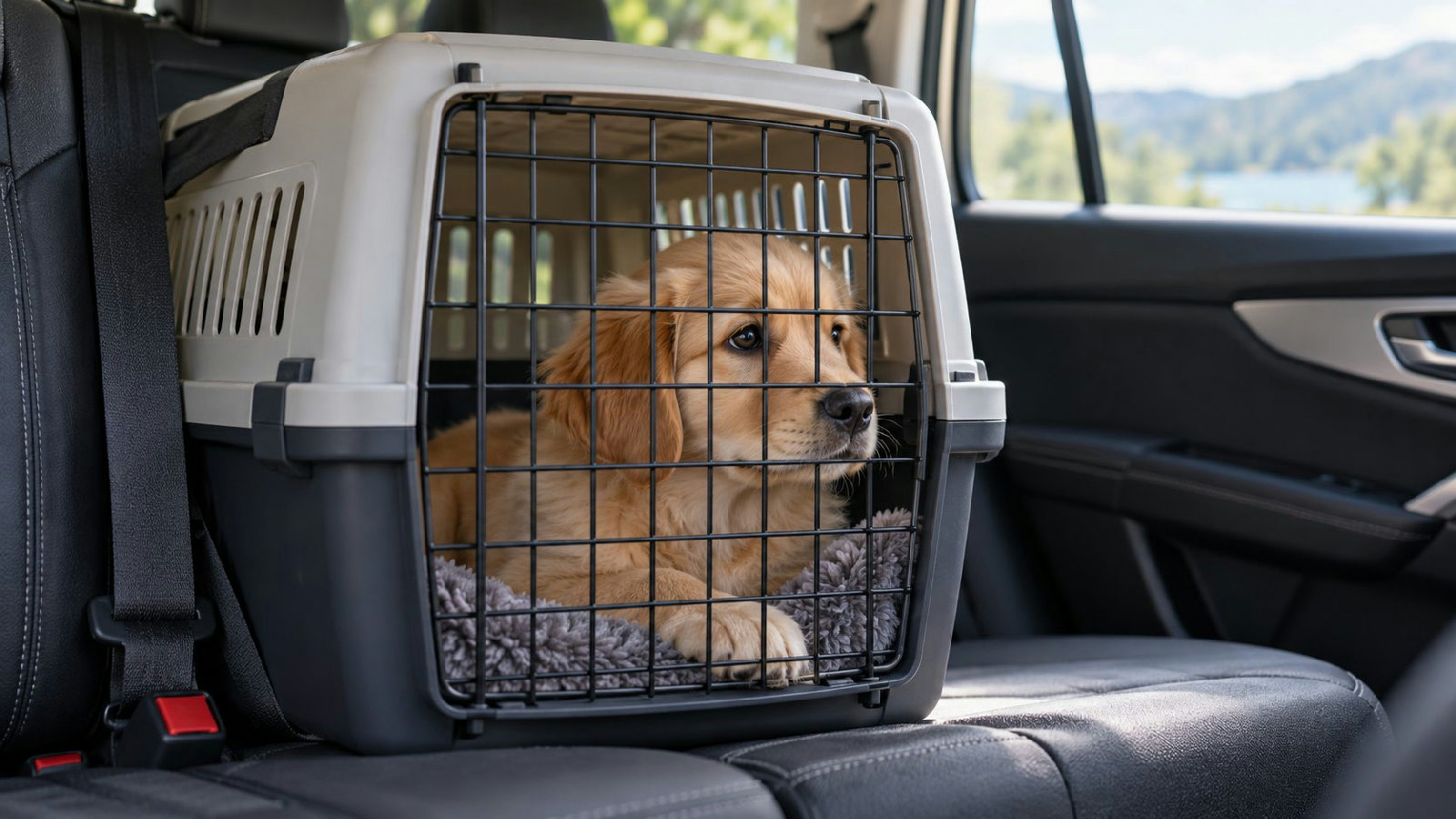
The calmest way to approach puppy car rides is to start with the car parked, pair it with treats and a favorite chew, and only add the engine, then a very short drive, while your puppy stays relaxed. Short, happy sessions spread over days and weeks are the whole plan. Let your puppy set the pace, watch their body language, and end each session before it becomes too much.
A quick note on who is writing: this is general, enthusiast-level guidance from a puppy notebook, not advice from a trainer or a vet, and it is not a fix for a specific behavior issue. If you think your puppy might be carsick, or car trips seem very hard for them, please loop in your vet or a professional trainer. Questions about motion sickness, food before travel or any remedy belong with your vet.
Puppy car rides: building calm, positive trips in six steps
If you only read one section, make it this one. Here is the routine this guide builds on:
- Treats near the parked car, with the doors open.
- Hang out inside the parked car for a few minutes with a chew.
- Practice your travel setup while parked, using the crate or harness your vet or trainer suggested.
- Add the engine for a few seconds, then switch it off.
- Take a tiny drive, like the end of the driveway and back.
- Write it down in a simple car log, then pick the next small step for another day.
Starting from wherever you are
If your puppy already digs in their heels at the car door, take a breath. A lot of new owners find the first few trips were the ride home and a vet visit, and the car isn’t a favorite place yet. This guide doesn’t ask you to hit a deadline; instead, it is a calm puppy car rides routine you can start today, at whatever level your puppy is comfortable with. For background reading on gentle, reward-based approaches, the American Veterinary Society of Animal Behavior publishes a humane dog training position statement.
Make a simple car list
Cars come with lots of small new experiences. A starter list might look like this:
- Around the car: the open door, the tires, the garage or driveway
- Getting in: being lifted in, or using a ramp if your vet suggests one
- Inside: the crate or harness, the seat, a blanket that smells like home
- Sounds: doors closing, the engine starting, the turn signal, the radio
- Movement: rolling down the driveway, slow turns, stopping at a sign
- Destinations: home again, a friend’s house, a quiet spot for a sniff
Order them from easy to harder
Quiet, still moments near the car go at the top. After that, add engine sounds, then movement, then longer trips further down. You can always reorder the list once you see how your puppy responds. Every puppy is different, so your list will look different from anyone else’s.
Starting with a parked car
The first steps don’t involve driving at all.
Step 1: Treats near the car
Walk your puppy near the parked car and hand out treats. Let them sniff the tires and the open door. Keep it short and happy.
Step 2: Hang out inside
Open the doors and sit in the back seat with your puppy for a few minutes. Offer treats, a chew or a short game with a favorite toy. Then get out. Repeat on different days.
Step 3: Practice the travel setup
Ask your vet or a trainer which travel setup suits your puppy, and follow the manufacturer’s instructions for fit and use. While parked, practice putting your puppy into that crate or harness, with plenty of treats, then take them out again.
Step 4: Add the engine
Once your puppy is relaxed in the parked car, start the engine for a few seconds, give a treat, then switch it off. Over several sessions, build up to a minute or two while your puppy enjoys a chew.
Step 5: Getting in and out
Lifting a small puppy in and out is fine. For larger puppies, ask your vet about jumping in and out and whether a ramp makes sense later.
Making the car a happy place
Some owners keep a special chew that only appears in the car, or bring the same blanket from home. The idea is simple: the car becomes a place where good things show up. Skip a session on days your puppy seems tired or unsettled.
Short trips to fun places
Once the parked car feels easy, it’s time for very short drives.
Keep it tiny
Your first drive might be to the end of the driveway and back, or once around the block. That’s a complete session.
End somewhere good
- Back home for a short play session
- A friend’s house for a calm visit
- A quiet spot for a short sniff, once your vet says public places fit your puppy’s plan
Mix in plenty of fun destinations alongside vet and groomer trips.
Drive gently
Smooth starts, slow turns and gentle braking make a good starting point. Also, try a quiet car with soft music or no music at first.
Bring a helper
For the first few drives, a calm passenger can sit in the back near your puppy and offer a treat at stop signs, while the driver focuses on the road.
For more calm exposure ideas, browse the other guides on Puppy Socialization.
Building up distance
When short rides are going smoothly, lengthen them a little at a time. Change only one thing per session.
A sample progression
- Parked car sessions until your puppy is relaxed
- Engine on, no movement
- End of the driveway and back
- Around the block
- A five-minute drive to a fun spot
- Gradually longer drives, with breaks
This is just an example. Some puppies move through the steps in a few days, others need weeks, and both are fine. Progress, not perfection.
Planning holiday trips
If you have holiday travel coming up, start practicing early. Plan breaks for potty stops and short walks, bring water and a familiar blanket, and keep your vet’s contact details handy.
A simple car log
A notebook or a note on your phone makes it much easier to see progress. After each session, jot down:
- The date and the step you practiced
- How long it lasted, and where you went
- Your puppy’s look: relaxed, curious, unsure or worried
- Whether they still took treats
- Anything you noticed during or after the ride, like drooling or vomiting
- Next time’s plan: same step, one step harder, or one step easier
Looking back over a week of notes helps you see small wins. A log is also handy to share with your vet or a trainer.
Signs your puppy needs a break
This guide uses one simple house rule: if you notice any of the following during a session, end the session and make the next one easier. You don’t need to work out what it means; just step back and note it in your log.
- Heavy panting when not hot
- Whining, barking or restlessness
- Drooling, lip licking or repeated yawning
- Trembling or trying to hide
- Refusing treats they normally love
- Vomiting
What to do
Calmly end the trip as soon as it’s safe, give your puppy a quiet moment, and next time go back a step, often to parked-car sessions. If you notice drooling or vomiting, also mention it to your vet.
When to loop in a trainer or your vet
Some things are bigger than a car game. Loop in your vet or a professional trainer if you notice:
- Drooling, vomiting or anything that makes you wonder about motion sickness
- Panic, or a long time to settle after a trip
- More worry over time rather than less
- Questions about food before travel, remedies or medication
- Questions about which crate or harness setup suits your puppy
Questions to bring along
- Could my puppy be carsick, and what would you suggest?
- Is there anything about feeding before a trip I should know for my puppy?
- Which travel setup would you recommend for my puppy’s size?
- Based on my car log, what would you suggest as a next step?
Bring your car log along. Asking early is not a failure; it is exactly the right call.
FAQs
When can I start puppy car rides?
Many owners start parked-car practice soon after their puppy comes home. For outings to public places, ask your vet what fits your puppy.
Should my puppy eat before a car ride?
Ask your vet. That’s a question about your individual puppy, especially if they’ve been sick in the car.
Is it okay to hold my puppy on my lap?
This guide sticks with a travel setup your vet or trainer has suggested, used as the manufacturer describes. A passenger can sit beside your puppy to offer treats.
My puppy cries the whole ride. What should I do?
Go back to shorter steps, add a chew and end trips somewhere fun. If crying continues, talk with your vet or a trainer.
Can older puppies learn to enjoy car rides?
The routine in this guide is the same at any age: start at a level your dog is comfortable with and go slowly.
Small wins count. A relaxed ride around the block is a great start.
Further reading
- AVSAB humane dog training position statement (2021)
- AVSAB puppy socialization position statement, a professional body’s view on the early months

