
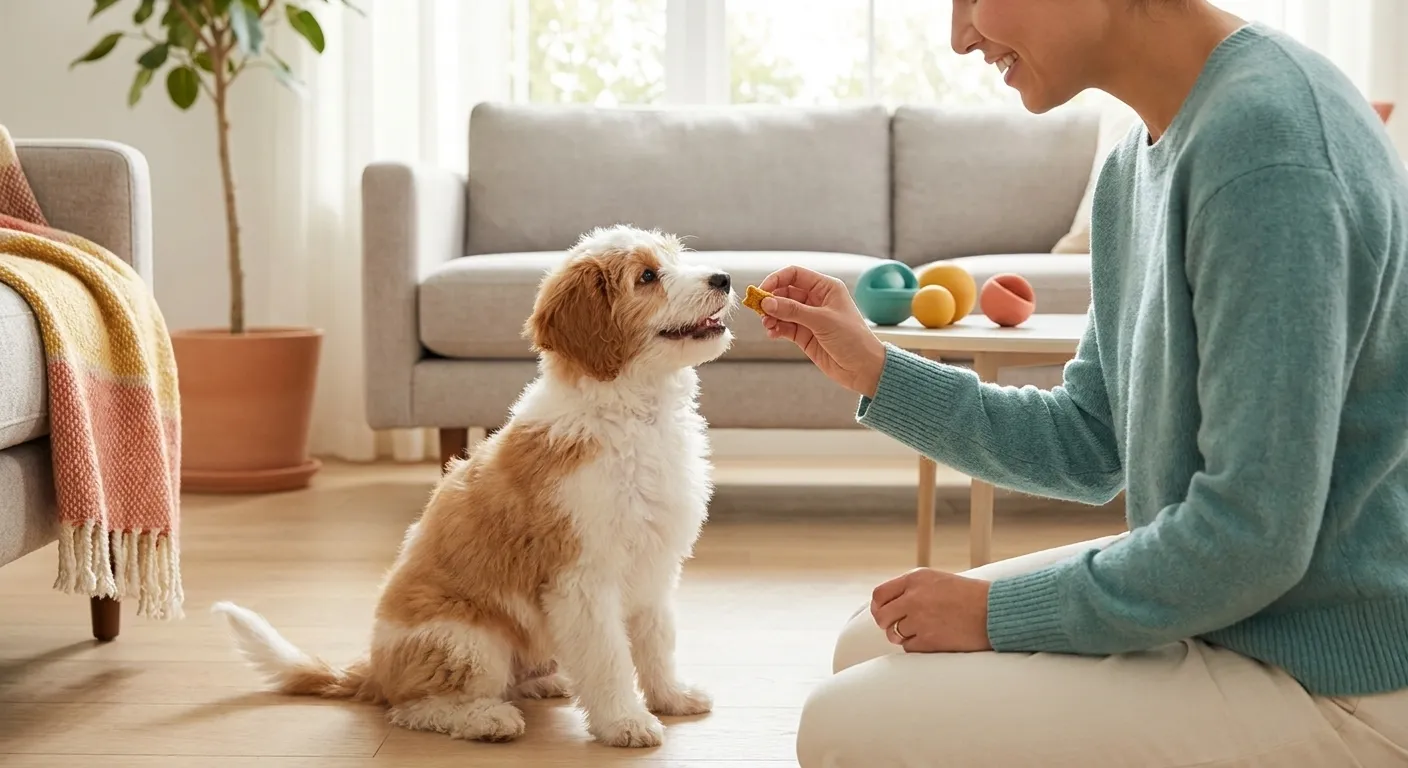
If you have spent any time researching how to train a puppy, you have run into dozens of competing methods. One approach that comes up again and again, for good reason, is positive reinforcement puppy training. It is not a trend; it is a simple, patient way of teaching that tends to build trust rather than fear. This is general, enthusiast-level guidance, not a substitute for a trainer’s assessment of your specific puppy, especially if something you are seeing looks more like a real behavior concern than everyday puppy learning — in that case, please loop in a professional trainer or your vet.
The Basic Idea Behind Positive Reinforcement
Positive reinforcement means adding something your puppy wants right after a behavior you want to see more of. When your puppy sits and you immediately offer a treat or warm praise, you are building a simple association: sitting leads to something good. Over time, puppies tend to repeat behaviors that have worked out well for them before, which is really just a plain, practical way of saying they learn from experience, the same as most animals do.
This approach tends to be gentler than methods built around correcting or punishing unwanted behavior. Many trainers and behavior-focused organizations favor it because it avoids the fear and uncertainty that can come with harsher methods, and it keeps the learning process something your puppy can feel good about rather than anxious about. The American Veterinary Society of Animal Behavior’s position statements on training methods describe reward-based approaches as generally preferred for this reason, alongside the behavioral science literature on operant conditioning. Letting your puppy set the pace, and rewarding the small steps along the way, tends to work better than expecting instant results.
A Quick Look at the Science
The underlying idea here isn’t new or trendy. Operant conditioning, the general principle that behavior followed by a rewarding consequence tends to repeat, has been studied in animal behavior research for decades, and it applies to puppies in a fairly straightforward way. You don’t need to understand the research to use it well day to day, but knowing it’s grounded in actual behavioral science, not just a training fad, can be reassuring if you’re wondering whether you’re doing this right. Psychology Today’s overview of operant conditioning is a reasonably approachable starting point if you want to go deeper, and organizations like Karen Pryor Clicker Training have built entire reward-based training methods around the same core idea.
Why This Approach Tends to Work Well for Puppies
A lot of new owners worry they are doing training wrong, or that their puppy will never quite get it. Positive reinforcement helps here because it is genuinely clear: reward the behavior you want, and skip the guesswork about what your puppy understood or didn’t. When you reward a puppy for calm behavior during a potty break, for example, they start connecting the dots quickly, without confusion or fear getting in the way.
It also tends to strengthen the relationship between you and your puppy. When good things, treats, praise, a favorite toy, consistently come from you, your puppy learns to see you as someone safe and worth paying attention to. That sense of safety is the foundation for everything else you will want to teach later.
What Actually Motivates Your Puppy
Figuring out what your particular puppy finds rewarding matters more than following a generic list. Treats are the obvious one, but a favorite squeaky toy, a quick game, or enthusiastic praise can work just as well for some puppies. The most useful rewards are the ones your puppy genuinely cares about, delivered right after the behavior you are trying to reinforce, since timing matters as much as the reward itself. The AKC’s expert advice library has general reading on reward variety if you want more ideas beyond treats.
Mixing up your rewards can help keep a puppy engaged rather than losing interest in the same treat every time. A small rotation, a favorite chew, a bit of praise, a short play session, gives you some flexibility depending on the situation and keeps training sessions feeling fresh rather than repetitive.
A Few Simple Ways to Start
You do not need a formal program to begin. Keep your first sessions short, just a few minutes at a time, and end on a success rather than pushing until your puppy loses interest. Reward the behavior the moment it happens rather than a few seconds later, since puppies connect rewards most clearly with whatever they were doing right at that instant. And keep your expectations realistic: progress is rarely a straight line, and a puppy having an off day is normal, not a sign that something is going wrong.
Building a Simple Weekly Routine
A small, consistent routine tends to work better than occasional long training sessions. Many owners find it helpful to pick two or three short behaviors to focus on for a week, sit, a calm greeting, coming when called over a short distance, and practice each one in a few brief sessions spread across the week rather than one long session. Once a behavior feels solid in a quiet room, the same short exercise can move to a slightly more distracting spot, like a different room or the backyard, before trying it somewhere busier like a quiet sidewalk. This kind of gradual, low-pressure progression lets a puppy build real confidence with a behavior before it is asked to perform it somewhere harder, which tends to produce steadier, more reliable results than jumping straight to a distracting environment. If you would like a second opinion on pacing, APDT’s trainer search is a reasonable way to find a certified professional near you.
When to Bring in a Professional
General positive reinforcement works well for everyday learning: sitting, coming when called, calm greetings. If you notice something that looks more like a real behavior concern, persistent fear, aggression, or reactivity that does not ease with gentle, consistent exposure, that is exactly the kind of thing worth a call to a local trainer or your vet, rather than something to work through alone with general tips. That is not a failure on your part; it is simply the right next step for your puppy, and it’s always okay to say no to a greeting or interaction that looks like it’s pushing your puppy past what they can handle in the moment.
Conclusion
Positive reinforcement is a patient, kind way to help your puppy learn, built on rewarding the behavior you want to see rather than punishing the behavior you don’t, and grounded in real behavioral science rather than a passing trend. It takes a bit of consistency and some trial and error to figure out what motivates your specific puppy, but the payoff is a puppy who trusts you and genuinely enjoys learning. Watch their body language, let them set the pace, and remember that progress, not perfection, and small wins count.
FAQ
How long does positive reinforcement training take to work?
It varies a lot by puppy and by behavior. Many owners notice progress within days for simple behaviors like sitting, while other habits take weeks of consistent, patient repetition.
What if my puppy doesn’t seem interested in treats?
Try a higher-value treat, like small pieces of cooked chicken, or switch to a different reward entirely, like a favorite toy or a burst of play. Every puppy is different.
Can I combine positive reinforcement with saying ‘no’?
Many owners use a calm, neutral interrupter alongside positive reinforcement, redirecting to a better behavior and rewarding that instead, rather than relying on correction alone.
Is positive reinforcement enough for serious behavior problems?
General positive reinforcement is well suited to everyday learning, but a real behavior concern, like persistent fear or aggression, is worth bringing to a local trainer or your vet rather than addressing with general tips alone.
How do I know if I’m rewarding at the right time?
Aim to reward within a second or two of the behavior. If there’s a longer delay, your puppy may connect the reward with something else they did in between.
Is positive reinforcement the same as clicker training?
Not exactly. Clicker training is one specific tool that uses a marker sound to pinpoint the exact moment of a good behavior, but it’s built on the same positive reinforcement principles described here. You don’t need a clicker to use positive reinforcement well, it’s just one option among several.

