
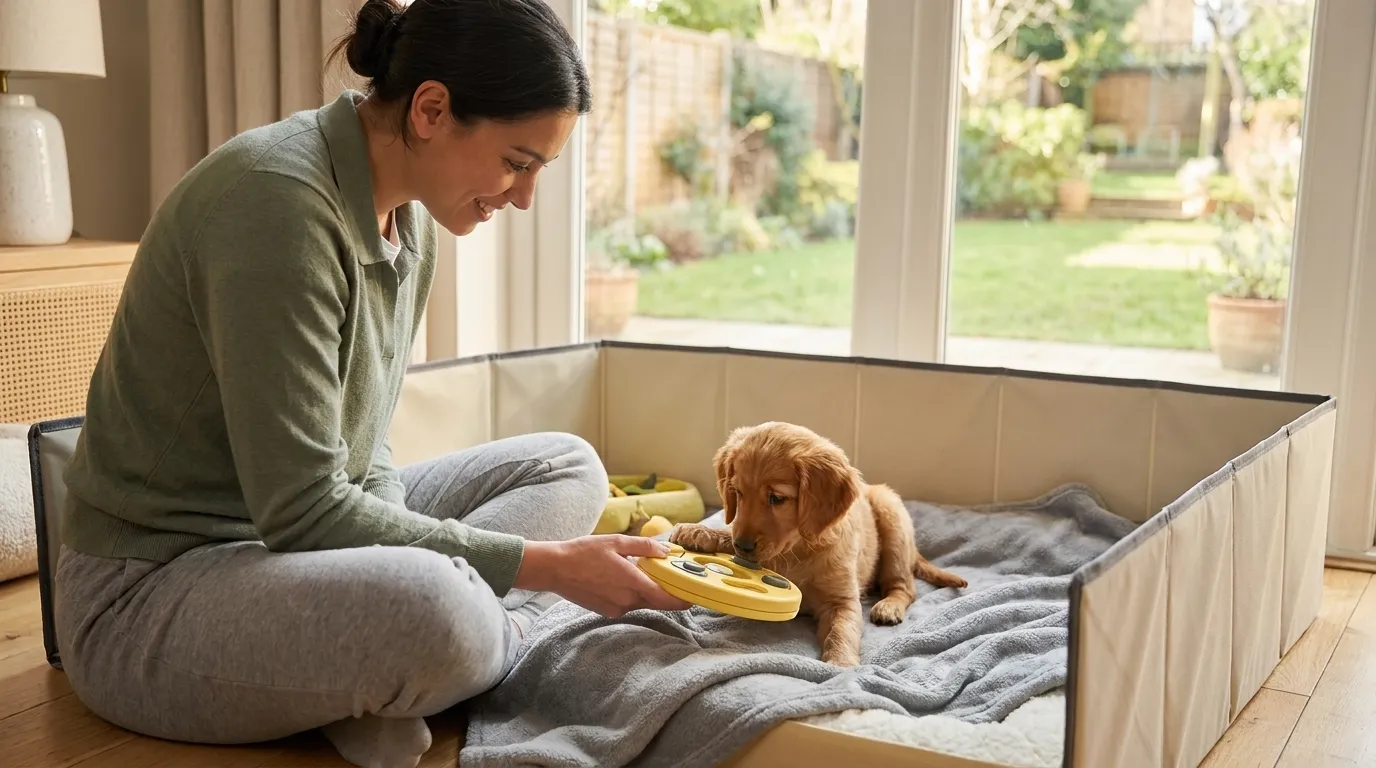
Bringing a new puppy into your life is incredibly rewarding, but for many new owners, especially busy professionals and families, the thought of leaving their furry friend alone can spark worry. With the shift back to in-office work for many, we’re seeing a rise in concerns about dogs developing separation anxiety. Learning how to prevent puppy separation anxiety early on is crucial for both your peace of mind and your pup’s long-term happiness and independence.
The pet industry has seen significant growth, with younger generations like Gen Z and Millennials increasingly treating pets as full family members. This ‘humanization’ trend means we want our pups to be happy, confident, and well-adjusted, even when we can’t be by their side. With first-year puppy ownership costs ranging from $3,000 to $8,800, proactive training like preventing separation anxiety can save you from costly behavioral interventions down the line.
Understanding Separation Anxiety in Puppies
Separation anxiety isn’t just a puppy missing you; it’s a genuine panic response. Symptoms can include excessive barking or howling, destructive chewing (especially around exits), inappropriate urination or defecation, and pacing. The good news is, by building independence from day one, you can significantly reduce the chances of your puppy developing this challenging behavior.
The Critical Window for Independence
The period from 8 to 12 weeks is especially receptive for teaching puppies about the world, including how to be comfortable on their own. Positive exposure to being alone, in short, manageable bursts, is part of proper socialization.
Proactive Steps to Prevent Puppy Separation Anxiety
1. Make the Crate a Happy Place (or use a Safe Space)
A crate, when introduced positively, becomes a den—a safe, cozy space for your puppy. Never use it for punishment. Feed meals in the crate, offer high-value chew toys (like a Kong stuffed with peanut butter), and cover it with a blanket to create a private retreat. Your goal is for your puppy to love their crate.
If you prefer not to crate, designate a puppy-proofed room or pen. The principle remains the same: it’s their safe, comfortable space for alone time.
2. Practice Short, Frequent Departures
Start small. Leave the room for a few seconds, then return before your puppy gets distressed. Gradually increase the time you’re away. The key is to make departures and arrivals low-key and uneventful. Avoid big, emotional goodbyes or excited hellos. This teaches your puppy that you leaving is no big deal and that you always come back.
3. Desensitize Departure Cues
Puppies quickly learn patterns. Grabbing your keys, putting on your shoes, or picking up your bag can become triggers for anxiety. Practice these actions randomly throughout the day without actually leaving. This breaks the association between the cue and your departure, making them less stressful for your pup. Consequently, your dog will remain calmer when you eventually do leave.
4. Encourage Independent Play
It’s natural to want to play with your puppy constantly, but it’s also important for them to learn to entertain themselves. Provide engaging puzzle toys or long-lasting chews that they can enjoy on their own. For example, a KONG filled with frozen pumpkin can keep them occupied for a good while. This builds their confidence in self-amusement, a vital skill to prevent puppy separation anxiety.
5. Establish a Predictable Routine
Puppies thrive on routine. A predictable schedule for feeding, potty breaks, playtime, and naps helps them feel secure. When they know what to expect, they are less likely to feel anxious about changes, including your departures. Furthermore, a consistent routine helps manage their energy levels, leading to calmer behavior overall.
6. Create a Calm Departure and Arrival Ritual
When you leave, avoid making a big fuss. A simple, calm

