
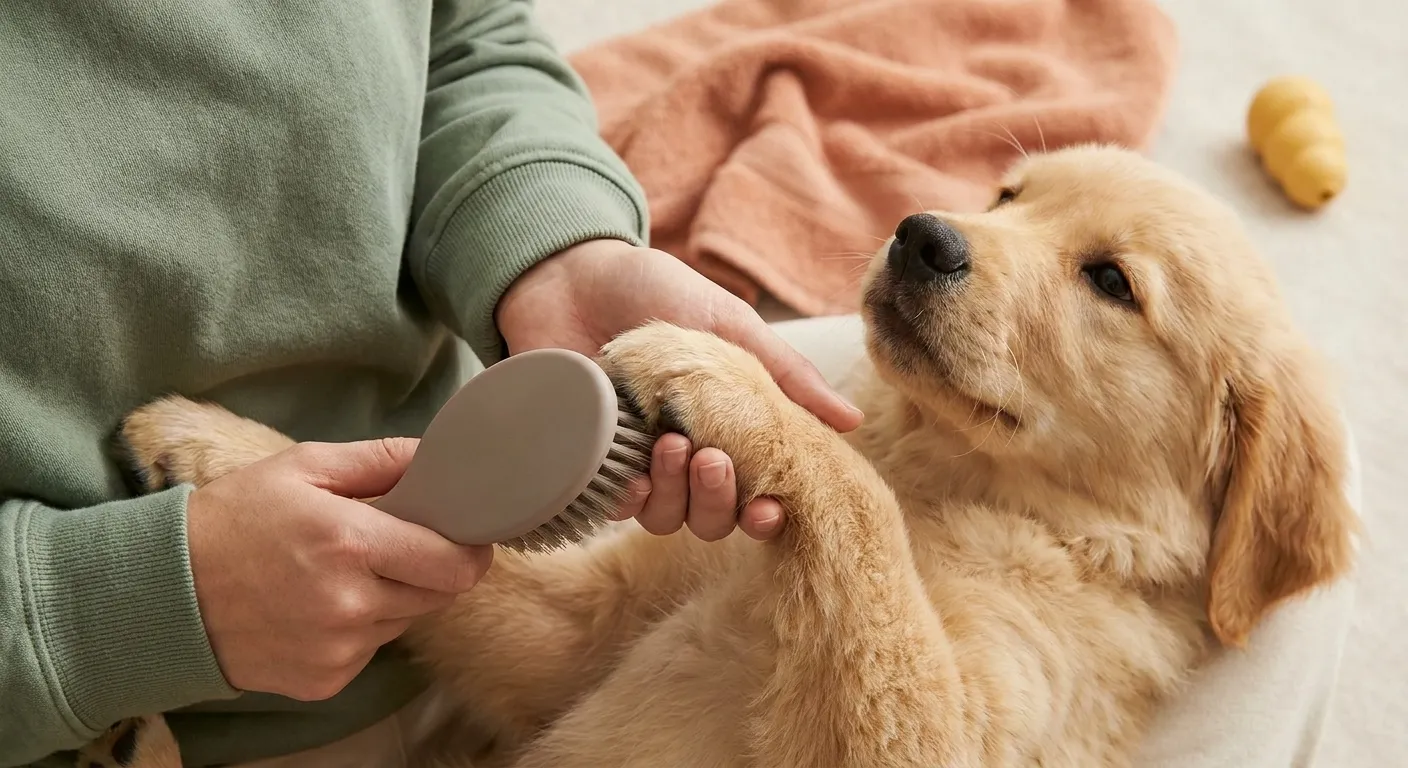
Puppy grooming handling tips is the focus of this guide. As new puppy parents, you’re naturally focused on exciting milestones like potty training and socialization. However, there’s another crucial aspect that often gets overlooked: getting your puppy comfortable with being handled and groomed. Regular grooming and vet visits are simply a fact of life for our canine companions. Therefore, making these experiences positive from the start is incredibly important for their long-term well-being.
These puppy grooming handling tips will help you transform potential struggles into calm, even enjoyable, routines. We understand it can feel overwhelming, especially with so much conflicting information available. Our goal is to provide clear, actionable, and affordable guidance so you can confidently raise a well-adjusted puppy.
Why Early Handling Matters So Much
Many new puppy owners don’t realize how foundational early handling is. In fact, it’s not just about cleanliness. It’s about building trust, reducing anxiety, and ensuring your puppy feels safe during necessary interactions. Imagine trying to trim nails or clean ears on an adult dog who finds these experiences terrifying. It becomes a stressful ordeal for everyone involved.
Furthermore, early positive exposure helps your puppy develop resilience. They learn that unfamiliar touches and sounds aren’t always scary. This proactive approach saves you stress, time, and potentially expensive professional help down the line. Moreover, it strengthens the bond you share with your puppy, built on mutual trust and understanding.
Understanding Your Puppy’s Perspective
For a puppy, being held still, having their paws touched, or hearing strange noises like clippers can be genuinely frightening. Their world is brand new, and they are constantly learning what is safe and what isn’t. Consequently, it’s vital to approach grooming and handling from their perspective.
Think of it as teaching them a new language of touch. You wouldn’t expect a toddler to sit still for a long haircut without preparation. Similarly, your puppy needs gentle introduction and plenty of positive reinforcement. This empathetic approach is key to success.
5 Essential Puppy Grooming Handling Tips for Success
Here are our top recommendations for making grooming a positive experience. Remember, consistency and patience are your best friends.
1. Start Small and Short: The Power of Brief Sessions
Don’t try to do everything at once. Begin with very brief sessions, just a few seconds long. For example, gently touch one of their paws for a moment, then immediately offer a high-value treat. Gradually increase the duration and intensity as your puppy becomes more comfortable.
The goal is to make it a positive, non-threatening interaction every single time. Short, frequent sessions are far more effective than long, infrequent ones. Your puppy should always be left wanting more, not dreading the next session. This builds a positive association effectively.
2. Positive Reinforcement is Key: Make it Rewarding
Always associate handling and grooming with good things. Use cheerful praise, tasty treats, and calm reassurance. If your puppy shows any signs of stress (lip licking, yawning, pulling away, low tail), stop immediately. Take a break, and try again later with an even shorter, gentler approach. Never force the interaction.
Positive reinforcement builds confidence and trust. It teaches your puppy that cooperation leads to good things. For instance, if they tolerate a quick ear check, they get a treat. This simple exchange is incredibly powerful in shaping their behavior.
3. Familiarize with Tools: Desensitization is Crucial
Let your puppy sniff and explore brushes, nail clippers, and even the hair dryer (from a distance) before using them. Introduce the sound of clippers or the dryer from far away, pairing it with treats. Slowly move closer as they stay relaxed.
This process, known as desensitization, helps them get used to potentially scary objects and noises. It removes the element of surprise and allows them to form positive associations. A great resource for understanding dog body language during desensitization can be found at ASPCA’s guide to dog body language.
4. Practice All-Over Touch: Preparing for Examinations
Gently touch every part of your puppy’s body: ears, mouth, paws, tail, and belly. This prepares them for vet exams and makes them more tolerant of being touched by others, including professional groomers. Pair each touch with a treat and praise, ensuring it’s a pleasant experience.
This regular, gentle touching helps normalize being handled. It teaches your puppy that human hands are safe and often bring good things. Consequently, future necessary handling will be much easier for everyone involved. These puppy grooming handling tips are foundational.
5. Simulate Vet Visits: Reducing Future Anxiety
Practice holding your puppy still on a table for short periods, gently examining their ears and mouth. You can even give mock “shots” with your finger. Reward heavily for cooperation. This helps reduce anxiety when they face the real thing at the vet’s office.
Creating a positive mock vet experience at home can significantly reduce fear and stress during actual vet appointments. It’s a proactive step that pays dividends in your puppy’s long-term health and happiness. For more insights on preparing your puppy for vet visits, consider resources like AKC’s advice on vet prep.
Beyond the Basics: Expanding Your Puppy Grooming & Handling Routine
Once your puppy is comfortable with the basic handling, you can gradually introduce more specific grooming tasks. Remember, always maintain a positive, patient approach. Your puppy’s comfort is paramount.
Brushing Sessions: A Relaxing Ritual
Regular brushing is more than just keeping their coat tidy. It helps prevent mats, distributes natural oils, and provides another opportunity for positive touch. Start with a very soft brush and short strokes. Always follow with praise and a treat.
Make brushing a calm, soothing experience. If your puppy enjoys it, you can extend the sessions. This also allows you to check for any skin issues or parasites early on. Consistent, gentle brushing contributes significantly to their overall well-being.
Nail Trims: A Skill to Master
Nail trimming can be one of the most challenging aspects of grooming. Start by simply touching the clippers to their paw, then treating. Gradually work up to touching individual nails with the clippers, then clipping just the very tip of one nail.
Use very sharp clippers designed for puppies. If you’re unsure, ask your vet or a professional groomer for a demonstration. A dremel tool can also be a less intimidating alternative for some puppies. Patience and small steps are crucial here. These puppy grooming handling tips are especially important for nail care.
Ear Cleaning and Dental Care: Vital for Health
Getting your puppy comfortable with ear handling is essential for regular cleaning and checking for infections. Gently lift their ears, look inside, and offer a treat. Similarly, introducing a puppy toothbrush and toothpaste (never human toothpaste!) early on can set them up for a lifetime of good dental hygiene.
Start with just letting them lick the puppy toothpaste off your finger. Then, introduce the brush for very brief periods. Oral health is incredibly important for a dog’s overall health, so these early habits are invaluable.
Common Challenges and How to Overcome Them
It’s completely normal to encounter some resistance. Don’t get discouraged! Every puppy is an individual, and some will take longer than others.
Fear of Specific Tools
If your puppy is particularly afraid of a brush or clippers, go back to basics. Place the tool on the floor, let them approach it, sniff it, and reward them for curiosity. Slowly move the tool closer to them while rewarding. Never force the tool on them. Sometimes, changing the type of brush or clippers can help.
Nail Trimming Anxiety
Many puppies dislike nail trims. If your puppy struggles, consider doing one nail per session, followed by a jackpot of treats. You can also try trimming nails while your puppy is sleepy or distracted by a long-lasting chew toy. Alternatively, working with a professional groomer or vet tech for a few sessions can provide valuable guidance and positive experiences.
Biting or Nipping During Handling
If your puppy nips during handling, it might be a sign of discomfort or overstimulation. Stop the session immediately. Give them a break, and then restart with an even gentler, shorter approach. Ensure you’re using high-value treats to make the experience overwhelmingly positive. Sometimes, a chew toy can redirect their attention during handling.
Building a Lifetime of Trust and Comfort
By consistently implementing these gentle puppy grooming handling tips early on, you’re not just getting your puppy clean; you’re building their confidence, teaching them to trust human touch, and setting them up for a lifetime of comfortable care. These small, consistent efforts will pay off immensely, making future grooming appointments and vet visits stress-free for everyone involved.
Remember, you are your puppy’s most trusted guide. Your patience, empathy, and positive reinforcement will shape their perception of the world. Celebrate every small success, and don’t be afraid to seek professional help if you encounter significant challenges. Ultimately, a well-handled puppy is a happy puppy, and a happy puppy means a happy owner.
These puppy grooming handling tips are designed to empower you. You can confidently navigate the grooming journey, fostering a deeper bond with your beloved companion.
FAQ: Gentle Grooming for Your Puppy
How often should I practice handling my puppy?
Aim for short, daily sessions. Even a few minutes each day can make a significant difference. Consistency is more important than duration when teaching your puppy about positive handling.
What if my puppy really hates a specific grooming tool?
If your puppy shows strong aversion, step back and reintroduce the tool very gradually. Pair it with their favorite treats and praise, keeping it at a distance initially. Sometimes, trying an alternative tool (like a different type of brush or nail grinder instead of clippers) can help. Never force the interaction.
When should I start professional grooming for my puppy?
You can introduce your puppy to a professional groomer as soon as they are fully vaccinated. Many groomers offer “puppy intro” sessions that focus on positive exposure rather than a full groom. These sessions are excellent for familiarizing your puppy with the sounds and sensations of a grooming salon.
Can I teach an older puppy or adult dog to tolerate grooming?
Yes, it’s never too late to start! The process will be similar to teaching a young puppy, but it might take more patience and time. Break down tasks into even smaller steps and use very high-value rewards. For adult dogs with significant fear or aggression, consulting a professional trainer or veterinary behaviorist is highly recommended.
What are the most important puppy grooming handling tips for first-time owners?
The most important tips are to start early, keep sessions short and positive, and use plenty of high-value treats. Focus on building trust and making every touch a pleasant experience. Consistency and empathy will be your greatest assets in preparing your puppy for a lifetime of comfortable care.
Explore more: More from Puppy Socialization

