As a new puppy owner, it can sometimes feel like your furry friend is speaking a different language. However, your puppy is constantly communicating with you through their actions, tail wags, and ear positions. Learning to understand puppy body language signs is a powerful tool for building a stronger bond and addressing their needs before problems arise. This knowledge helps you identify when they’re happy, scared, playful, or overwhelmed, allowing you to respond empathetically and effectively.
Many new pet parents feel a little lost when their puppy tries to tell them something. Perhaps you’ve wondered if that yawn means they’re tired, or if a certain tail wag means they’re truly happy. Rest assured, you’re not alone in these questions! We’re here to gently guide you through the fascinating world of canine communication, making it simple and clear. Understanding these signals will transform your relationship, fostering a deeper connection with your beloved companion.
Decoding Puppy Body Language Signs: The Basics
Observing your puppy’s posture, facial expressions, and tail movements can tell you a lot. For instance, a relaxed puppy often has a loose body, soft eyes, and a gently wagging tail (or no wag at all). They might solicit play with a ‘play bow’ – front end down, rear end up, tail wagging excitedly. This is a clear invitation to fun, indicating they feel safe and ready to engage. Furthermore, their mouth might be slightly open in a relaxed ‘smile’, and their ears will be in a natural, soft position.
On the other hand, signs of stress or fear include a tucked tail, flattened ears, yawning, lip licking, or turning their head away. If your puppy is stiff, has wide eyes, or a rigid tail, they might be feeling uncomfortable or even threatened. Recognizing these subtle cues helps you intervene, remove them from a stressful situation, or offer reassurance. Moreover, trembling, panting when not hot, or excessive drooling can also indicate anxiety. It’s important to remember that these signals are not always obvious, so paying close attention to the whole picture is key.
Consider your puppy’s overall demeanor. Is their weight shifted backward, suggesting a desire to retreat? Are their pupils dilated even in normal light? These small details contribute to the bigger picture of their emotional state. By observing these behaviors, you can become a more attuned and responsive guardian. This proactive approach helps prevent potential behavioral issues down the line, as you’ll be addressing their needs before they escalate into bigger problems.
Happy and Playful Postures
When your puppy is happy, their whole body often communicates joy. A loose, wiggly body, especially when greeting you, is a fantastic indicator of happiness. Their tail will likely be wagging freely, often in wide, sweeping motions. Interestingly, the speed and height of the wag can also offer clues; a high, fast wag usually means excitement, while a lower, slower wag can indicate a more relaxed happiness.
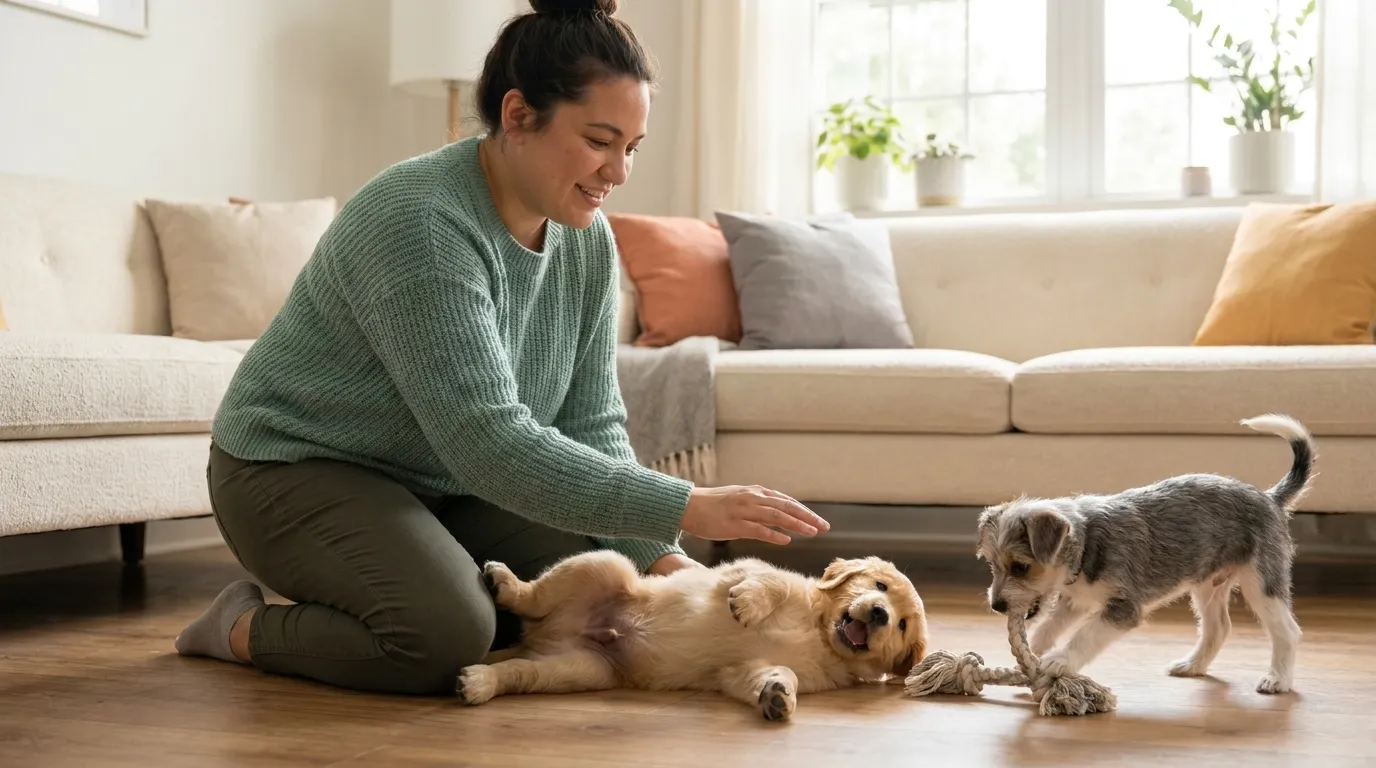
A classic invitation to play is the ‘play bow’. Your puppy will lower their front end to the ground, keeping their rear end up in the air, often with a wagging tail and a happy, open mouth. This universal signal tells other dogs and humans, “Let’s have some fun!” Another common playful gesture is a ‘pounce,’ where they might leap at a toy or even another dog, often followed by a quick retreat, inviting a chase. These playful puppy body language signs are a delight to witness and encourage.
During play, you might also see your puppy doing ‘zoomies,’ which are bursts of frantic running in circles. This is a normal and healthy way for puppies to release energy and express joy. While playing, a puppy’s mouth may be open, and they might even make soft growling or barking sounds. These are typically part of the game, as long as the body remains loose and relaxed, and the play is reciprocal. Always look for mutual engagement and breaks in play, which are healthy signs.
Signs of Fear or Anxiety
Recognizing when your puppy is scared or anxious is crucial for their well-being. A tucked tail, flattened ears pressed against their head, and a lowered body posture are common indicators. They might also try to make themselves appear smaller, perhaps by crouching or hiding behind your legs. Yawning, lip licking, and turning their head away are often subtle signs of stress, especially when done out of context (e.g., not after waking up or eating).
Moreover, watch for ‘whale eye,’ where you can see the whites of your puppy’s eyes. This often suggests they are feeling uneasy or threatened. Trembling, panting excessively when not hot, or drooling can also signal distress. If your puppy tries to escape a situation, or vocalizes with whines or low growls, they are clearly communicating their discomfort. Understanding these indicators of fear and anxiety is vital for effective intervention. For more insights on ensuring your puppy’s comfort and safety, explore our resources on ID Tags & GPS Trackers.
Sometimes, a puppy might freeze, becoming very still and rigid. This ‘freeze’ response is a natural reaction to fear and can precede a ‘flight’ (running away) or ‘fight’ (snapping or biting) response if the perceived threat isn’t removed. If you see these puppy body language signs, it’s essential to remove your puppy from the stressful situation gently and calmly. Never punish a puppy for showing fear; instead, offer comfort and a safe space.
Aggression and Discomfort Cues
While puppies are generally sweet, they can show signs of discomfort or potential aggression, especially if they feel threatened or overwhelmed. Stiff body posture, a rigid tail (held high or straight out), and a hard stare are serious warning signals. Their fur might stand up along their spine (piloerection), making them appear larger. A low growl or snarl, baring teeth, or snapping are clear indications that your puppy feels the need to defend themselves.
It’s important to differentiate between playful nips and actual aggression. In play, nips are usually soft and followed by a relaxed body. Aggressive bites, however, are often preceded by the stiff body language mentioned above and are meant to warn or harm. Recognizing these serious puppy body language signs allows you to prevent escalation. If you notice consistent aggressive behaviors, it’s wise to consult with a professional dog trainer or veterinary behaviorist.
Understanding these cues also helps you interpret their interactions with other dogs and people. If your puppy is being overly persistent in play and the other dog is showing signs of avoidance (like turning away, growling softly, or lip licking), it’s time to step in and give both dogs a break. Similarly, when meeting new people, watch for signs of comfort or discomfort. A happy, wiggly body indicates enjoyment, while leaning away or hiding suggests they might need more space and a slower introduction. Being attuned to these non-verbal signals empowers you to be a more responsive and supportive pet parent, fostering a confident and secure environment for your growing puppy.
Tail Talk: What Your Puppy’s Tail is Saying
The tail is one of the most expressive parts of your puppy’s body, offering a wealth of information about their mood. However, it’s not just about the wag; the height, speed, and even the stiffness of the tail are all important. A high, fast wag usually indicates excitement and happiness. Conversely, a low, slow wag might suggest caution or uncertainty. A tail tucked firmly between their legs is a clear sign of fear or submission.
A tail held high and stiff can indicate alertness, or even a challenge, especially if combined with a stiff body. A tail held at a ‘neutral’ height, with a gentle, relaxed wag, often signifies a comfortable and content puppy. It’s crucial to remember that tail wags are complex. A wag doesn’t always mean happiness; sometimes, it can indicate arousal, which could be positive or negative. Always consider the entire context of their body language.
For example, a high, fast wag with a stiff body and an intense stare is very different from a high, fast wag with a loose, wiggly body and soft eyes. Observing these nuances helps you truly understand what your puppy is trying to convey. Resources from organizations like the ASPCA often provide excellent visual guides to help new owners decode these subtle messages.
Ear Positions and Facial Expressions
Your puppy’s ears and face are also key communicators. Ears that are relaxed and in their natural position usually mean your puppy is comfortable and calm. Ears flattened against the head, or pulled back, often signal fear, anxiety, or submission. Ears perked up and forward indicate alertness and interest, meaning they are paying close attention to something.
Facial expressions, though subtle, also provide clues. Soft, almond-shaped eyes usually mean a relaxed puppy. Wide, round eyes, especially with visible whites (whale eye), can suggest fear or tension. A relaxed mouth might be slightly open, sometimes with a gentle ‘smile.’ A tightly closed mouth, lip licking, or yawning (when not tired) can be signs of stress. Furthermore, a wrinkled brow can indicate confusion or concern.
Moreover, a puppy might squint their eyes or avoid direct eye contact if they feel uncomfortable or threatened. Pay attention to their gaze. A direct, prolonged stare can be perceived as a challenge by other dogs, while a soft, averted gaze is often a sign of deference or calmness. Learning to read these subtle facial cues will significantly enhance your ability to understand your puppy’s emotional state. This understanding allows you to provide appropriate comfort or adjust your interactions as needed.
The Importance of Context
When interpreting puppy body language signs, context is everything. A yawn might mean tiredness if your puppy just woke up, but it could indicate stress in a new, overwhelming environment. A lip lick after eating is normal, but a rapid series of lip licks during a tense interaction signals anxiety. Therefore, always consider the situation, environment, and other accompanying signals. This holistic approach helps you avoid misinterpretations.
For instance, a play bow is a clear invitation to play, but if a puppy performs a play bow and then immediately runs away and hides, the context suggests fear rather than playful intent. Similarly, a growl during a tug-of-war game is usually playful, but a growl when someone approaches their food bowl is a warning. Always observe the sequence of events and the other behaviors your puppy is displaying. For more helpful tips, you can often find valuable insights on reputable sites like the American Kennel Club (AKC).
Understanding your puppy’s individual personality also plays a role. Some puppies are naturally more timid, while others are bolder. What might be a sign of mild curiosity for one puppy could be overwhelming for another. By observing your puppy over time, you’ll learn their unique communication style, making you an even better interpreter of their needs. This journey of understanding is an ongoing and rewarding process.
Building a Stronger Bond Through Understanding
When you consistently respond to your puppy’s communication, you build trust and strengthen your bond. If your puppy signals discomfort and you remove them from the situation, they learn that you are their protector. If they invite play and you engage, they learn that you are a fun and reliable companion. This responsiveness is the foundation of a healthy, secure relationship.
Being able to read your puppy’s non-verbal cues also helps prevent behavioral problems. For example, recognizing early signs of overstimulation can help you provide a quiet break before your puppy becomes overtired and nippy. Similarly, identifying fear signals allows you to create positive experiences and build confidence, rather than inadvertently pushing them into situations that reinforce their anxieties. This proactive approach saves both of you stress in the long run.
Empathetic responses to your puppy’s communication foster a sense of security and confidence in them. They learn that their signals are heard and respected, which is incredibly empowering for a young dog. This understanding also extends to their interactions with toys. For example, knowing your puppy’s mood can help you choose the right Puzzle Toys to engage them when they’re playful, or a comforting Chew Toy when they’re feeling a bit anxious. It’s all about thoughtful interaction.
Common Misinterpretations of Puppy Body Language
Sometimes, what seems obvious isn’t always the case. For example, a puppy rolling onto their back might look like an invitation for a belly rub, but it can also be a sign of submission or fear, especially if their body is stiff and eyes are averted. In this context, forcing a belly rub could increase their anxiety. Similarly, a quick nip that feels like play might actually be a warning if the puppy’s body language indicates discomfort, not joy.
Another common misinterpretation involves ‘apology peeing,’ where a puppy might urinate a little when excited or submissive. This is not a sign of spite or a lack of house-training but rather an involuntary physiological response to strong emotions. Punishing this behavior will only increase their fear and anxiety. Instead, understand it as a signal and work on building their confidence. Understanding these nuances is crucial for effective communication.
Furthermore, a puppy who is overly quiet and still might not be ‘well-behaved’; they might be shut down due to overwhelming fear. It’s easy to praise a quiet puppy, but it’s important to differentiate between calm confidence and fearful stillness. Always look at the whole picture of their body language and the situation. Your ability to correctly interpret these subtle puppy body language signs will profoundly impact your puppy’s development and trust in you.
Conclusion: Becoming Your Puppy’s Best Interpreter
Learning to decode your puppy’s communication is one of the most rewarding aspects of pet ownership. By observing their posture, tail, ears, and facial expressions, you gain invaluable insight into their emotional world. This understanding allows you to respond with empathy, provide comfort when needed, and engage in play when invited. Remember, every puppy is an individual, so take the time to learn their unique nuances.
Your journey to understanding these vital puppy body language signs will strengthen your bond, prevent misunderstandings, and help you raise a confident, well-adjusted companion. It’s a continuous learning process, but with patience and keen observation, you’ll become an expert in your furry friend’s language. Keep practicing, and you’ll be amazed at how much your puppy has to say!
FAQ: Understanding Your Puppy’s Non-Verbal Cues
What does it mean when my puppy yawns a lot?
While yawning can mean your puppy is tired, it’s also a common sign of stress or anxiety, especially when it occurs in a new or overwhelming situation, or during a tense interaction. Always consider the context of their environment and other body signals.
Is a wagging tail always a sign of a happy puppy?
Not always! A wagging tail indicates arousal, which can be positive (excitement, happiness) or negative (anxiety, conflict). Pay attention to the tail’s height, speed, and stiffness, as well as the rest of your puppy’s body language, to understand the true meaning.
How can I tell if my puppy is scared or just being shy?
Scared puppies often show clear signals like a tucked tail, flattened ears, trembling, lip licking, or trying to hide. Shy puppies might also avoid eye contact or lean away, but typically without the intense physical signs of fear. If in doubt, give them space and gentle reassurance.
What should I do if my puppy shows signs of discomfort around other dogs?
If your puppy displays discomfort, such as a tucked tail, lip licking, or trying to retreat, gently remove them from the interaction. Give them a break and a safe space. It’s important not to force interactions; instead, work on positive, brief exposures from a distance.
Why does my puppy sometimes pee when I greet them?
This is often called ‘submissive urination’ or ‘excitement urination.’ It’s an involuntary response to strong emotions like extreme excitement or feeling overwhelmed, not a training issue. Avoid scolding, as this will only increase their anxiety. Instead, greet them calmly and perhaps outside.

