
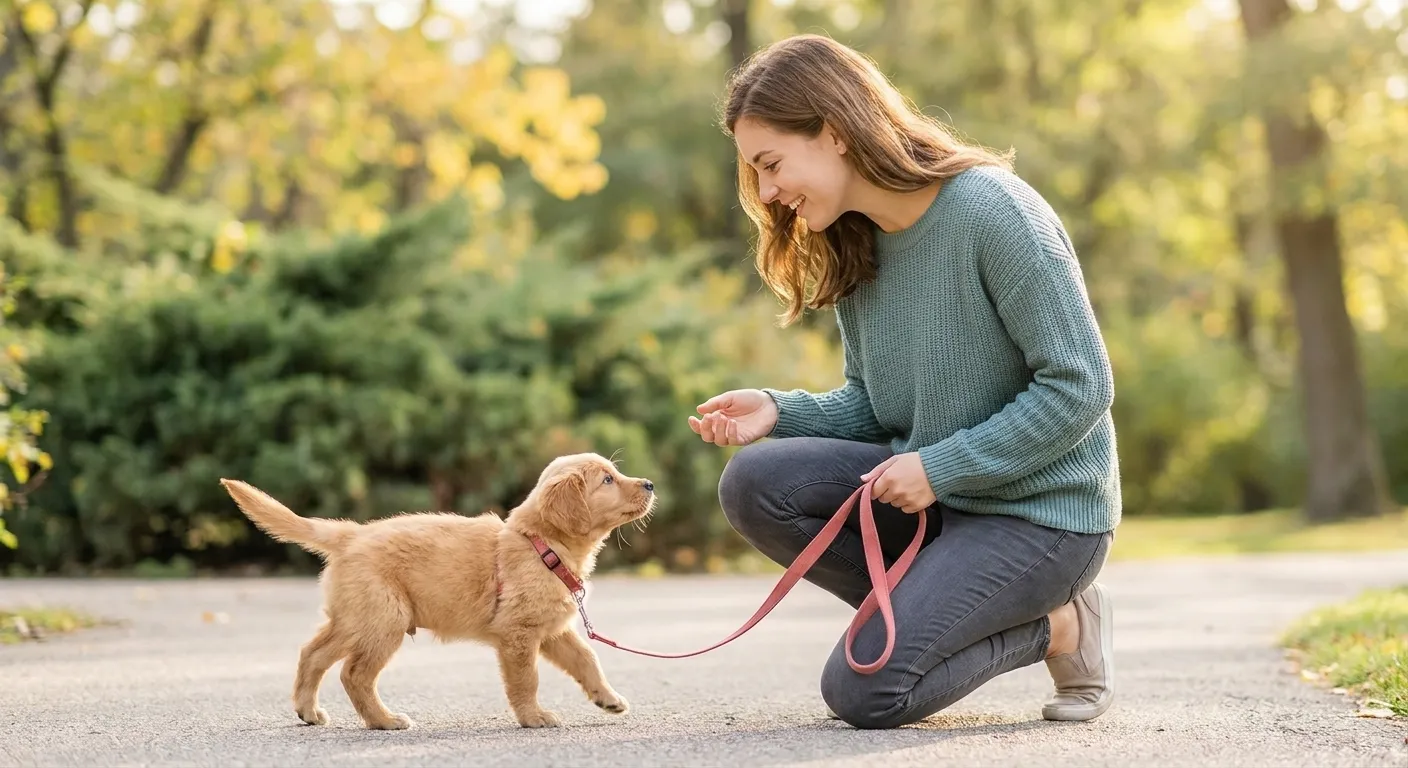
Getting your new puppy out into the world for walks is an exciting milestone. However, it can also feel like wrestling an octopus on a rope! Many new owners find themselves frustrated by pulling, lunging, or freezing on the leash. Our goal is to make puppy leash training a positive, stress-free experience from day one. This will set you and your puppy up for a lifetime of enjoyable strolls. You don’t need fancy equipment; just patience and positive reinforcement.
Starting Puppy Leash Training Indoors
Before you even step outside, begin your journey to comfortable walks indoors. First, introduce the collar or harness. Let your puppy wear it for short periods, especially during mealtimes or play. This helps them associate it with positive things. Once they’re comfortable, attach a lightweight leash and let them drag it around the house under supervision. This familiarizes them with the feeling of the leash without the pressure of walking. Reward them with treats and praise for ignoring the leash or for calm behavior while wearing it. This gentle introduction prevents negative associations and builds their confidence.
Next, practice walking inside. Hold the leash loosely and use treats to lure your puppy to walk beside you. Take a few steps, reward, then stop. Repeat this many times in short sessions. If your puppy pulls, stop walking immediately. Only resume when the leash slackens. This teaches them that pulling gets them nowhere. A loose leash, conversely, means forward movement and rewards. Keep sessions short and fun, ending on a positive note. Remember, every successful indoor step builds the foundation for happy, confident outdoor walks. Consistency is key, and celebrating small victories will make the process enjoyable for both of you.
Choosing the Right Gear for Your Puppy’s First Walks
Selecting the correct collar, harness, and leash is crucial for effective puppy leash training. A flat buckle collar is suitable for identification tags and light leash work. For initial training, however, many owners prefer a front-clip harness. This type of harness gently redirects your puppy’s pulling energy back towards you, making it harder for them to pull strongly. It also reduces pressure on their delicate neck. Be sure to choose a harness that fits snugly but comfortably, allowing two fingers to slip underneath. Similarly, for the leash, a lightweight, 4-6 foot nylon or leather leash is ideal. Avoid retractable leashes during initial training. They offer less control and can teach your puppy that pulling extends their reach, which is the opposite of what we want.
Consider your puppy’s breed and size when making your choices. A tiny chihuahua might need a different setup than a boisterous golden retriever. Moreover, ensuring comfort is paramount. An ill-fitting collar or harness can cause chafing or discomfort, creating a negative association with walks. You can find many suitable options for your puppy’s safety, including ID Tags & GPS Trackers, on our site. Always check the fit regularly as your puppy grows.
Mastering the Loose-Leash Walk: Techniques and Tips
The ultimate goal of puppy leash training is a loose-leash walk. This means your puppy walks by your side without tension on the leash. To achieve this, continue the indoor practice, gradually moving to a quiet outdoor area. Begin by walking a few steps, and as your puppy stays by your side with a loose leash, immediately mark the behavior with a verbal cue like “Yes!” or a clicker, followed by a high-value treat. This positive reinforcement helps your puppy understand what you want them to do. Furthermore, vary your pace and direction. Suddenly changing direction can help prevent pulling, as your puppy learns to pay attention to your movements.
If your puppy pulls, stop walking immediately. Stand still like a tree. Only move forward again when the leash goes slack. This teaches them that pulling stops the fun, while a loose leash means progress and rewards. Consistency is vital here. Every time you allow pulling, you inadvertently reinforce the behavior. Keep training sessions short, perhaps 5-10 minutes, especially for young puppies. Their attention spans are limited. Always end on a good note, with success and praise. Remember, patience is your best friend during this process. Celebrate every small victory!
Handling Distractions and Challenges on Outdoor Walks
Outdoor environments are full of exciting distractions: squirrels, other dogs, interesting smells, and new people. These can be overwhelming for a young puppy and present challenges to your leash manners training. Start in low-distraction environments, like your backyard or a quiet street. Gradually introduce more stimulating areas as your puppy gains confidence. When a distraction appears, try to get your puppy’s attention before they react. Use their name or a

