
As a new puppy parent, you are constantly looking for ways to give your furry friend the best start in life. While physical exercise is important, never underestimate the power of mental stimulation. In fact, enrichment for puppies is crucial for their development, helping to prevent boredom, reduce destructive behaviors, and build confidence. Many new owners worry about the cost. But with all the new expenses, how do you provide engaging enrichment without breaking the bank? The good news is, you don’t need fancy, expensive toys to keep your puppy’s brain busy. Many effective enrichment activities can be created using everyday items or by simply rethinking playtime.
Why Enrichment for Puppies is Crucial for Development
Imagine being stuck in a room with nothing to do. You would likely get bored, restless, and maybe even start chewing on the furniture! Puppies are no different. Their minds are like sponges, eager to learn and explore. Mental stimulation through activities that engage them helps satisfy their natural instincts to sniff, chew, problem-solve, and explore. Consequently, it can significantly reduce common puppy issues like excessive barking, digging, or chewing inappropriate items, channeling their energy into positive outlets. A mentally tired puppy is often a well-behaved puppy. This type of mental engagement is truly vital for their overall well-being and happiness.
Easy & Affordable DIY Enrichment Ideas
Here are some fantastic ways to provide mental stimulation using items you likely already have around the house:
1. DIY Puzzle Feeders
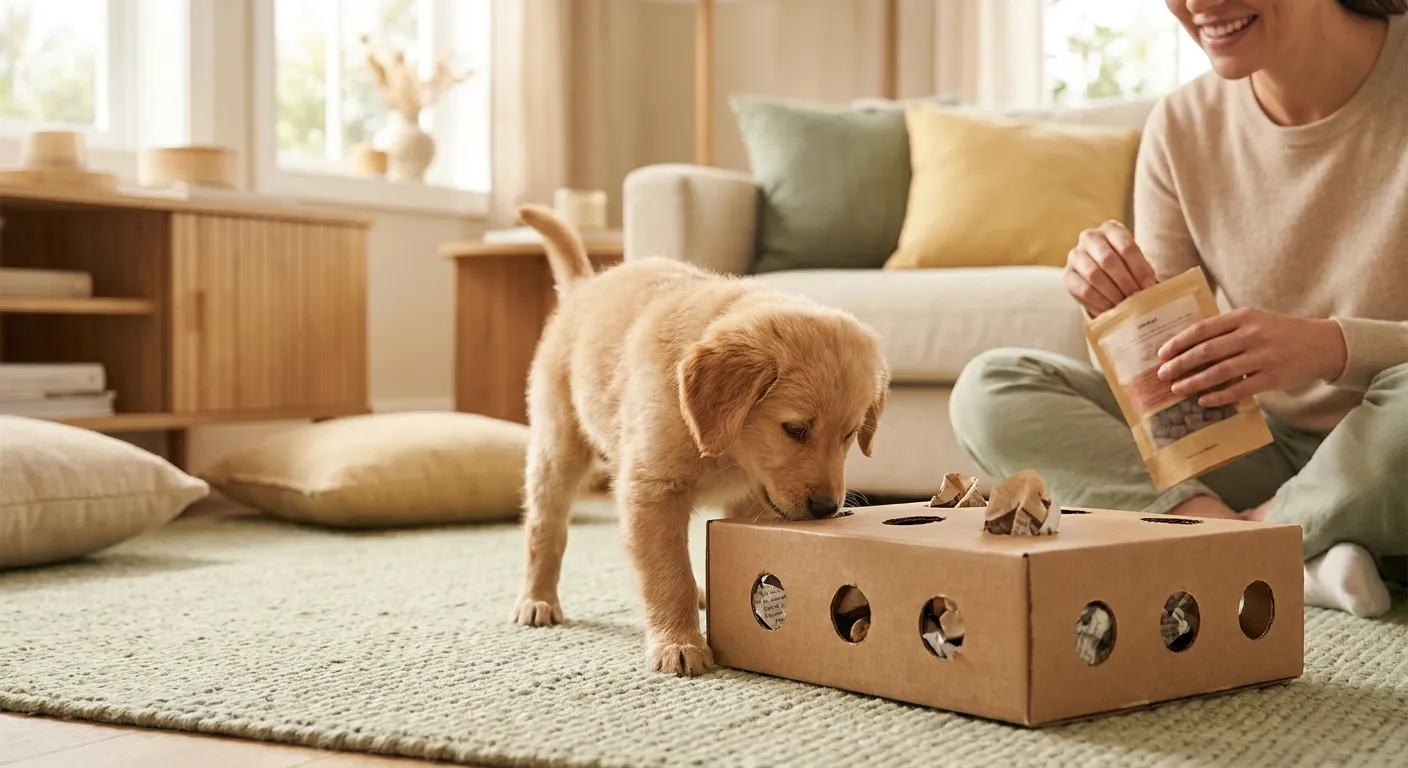
Forget expensive puzzle toys! You can easily create your own. Take an empty plastic water bottle (remember to remove the cap and label), an old towel, or a cardboard box. Place a few pieces of kibble or small treats inside, then let your puppy figure out how to get them out. For instance, you could cut small holes in a plastic bottle. For a snuffle mat alternative, sprinkle kibble over an old towel, roll it up, and tie loose knots. This encourages sniffing and problem-solving, turning mealtime into a mental game. Similarly, a muffin tin with treats hidden under tennis balls offers another simple challenge.
2. Scent Games: “Find the Treat”
Puppies have an incredible sense of smell. You can harness this by playing simple scent games. Hide treats around a room (start easy, then make it harder) and encourage your puppy to “find it!” This engages their natural foraging instincts and builds confidence as they successfully locate the hidden treasures. To begin, let them watch you hide the treat. Then, gradually increase the difficulty by having them wait in another room. This is a wonderful way to provide enrichment for puppies without any cost.
3. Chew Toys and Appropriate Outlets
Chewing is a natural and necessary behavior for puppies, especially during teething. Therefore, provide a variety of safe, durable chew toys. You can even freeze a Kong stuffed with peanut butter (always xylitol-free!), yogurt, or wet food for a longer-lasting, cooling treat. For an even more budget-friendly option, consider soaking a clean, knotted washcloth in chicken broth and freezing it. This provides a soothing chew toy for sore gums. For more help with this common puppy stage, you might find our guide on Nip It in the Bud: Evidence-Based Solutions for Puppy Chewing Problems very helpful.
4. Training Games and New Tricks
Training isn’t just about obedience; it’s fantastic mental stimulation! Learning new commands or practicing existing ones in novel environments challenges your puppy’s brain. For example, teach them “touch” (to nose-target your hand) or “spin.” Even practicing “sit” and “stay” in different locations provides valuable mental exercise. Keep sessions short, positive, and fun. Consequently, your puppy will enjoy the learning process. This type of brain engagement is a fantastic form of puppy enrichment.
5. The Magic of Cardboard Boxes
Don’t throw away those empty cardboard boxes! They are a treasure trove of possibilities for puppy entertainment. You can hide treats inside, tear them into interesting shapes for your puppy to investigate, or even create a simple “box fort” for them to explore. Always supervise to ensure they aren’t ingesting large pieces of cardboard. This simple item provides endless opportunities for exploration and play, making it excellent for mental stimulation.
6. Interactive Play with You
Your presence and engagement are some of the best forms of brain games for puppies. Engage in games like tug-of-war (with appropriate rules), fetch, or hide-and-seek. These activities not only provide mental stimulation but also strengthen your bond. Remember to keep it positive and let your puppy “win” occasionally to build their confidence. These interactions are invaluable for their development.
Expanding Your Puppy’s World Safely
Beyond structured activities, simply exposing your puppy to new sights, sounds, and smells in a safe and controlled manner provides immense developmental benefits. This is a crucial part of their Understanding Puppy’s Critical Socialization Period: What New Owners Need to Know. Consider short, positive trips to a pet-friendly store, a quiet park, or even just a walk around a different block in your neighborhood. Each new experience is a learning opportunity. Just be mindful of their comfort level and avoid overwhelming them. Gradual exposure helps them become well-adjusted adults.
Exploring New Textures and Surfaces
Puppies learn so much through their paws! Introduce them to different safe surfaces like grass, concrete, carpet, or even a crinkly mat. This sensory experience helps them develop confidence and adaptability. For instance, you could lay out a few old towels or blankets on the floor. Always ensure the surfaces are clean and free from hazards. This simple exploration is a form of enrichment for puppies that is often overlooked.
Observation Time: Watching the World Go By
Sometimes, simply allowing your puppy to safely observe the world from a window or a quiet outdoor spot can be incredibly stimulating. They can watch people, cars, birds, and other animals. This passive observation engages their minds without requiring active participation. Ensure they are comfortable and not overly stimulated. A short, calm observation session can be surprisingly enriching.
Homemade Frozen Treats for Mental Engagement
Frozen treats are a fantastic way to keep your puppy occupied and mentally stimulated, especially on warmer days. They take longer to consume, providing extended engagement. Here are a couple of ideas:
Peanut Butter & Banana Delight
Mash a ripe banana with a tablespoon of xylitol-free peanut butter. You can add a little plain yogurt (check for xylitol) or some kibble. Spoon this mixture into a Kong, a silicone mold, or even an ice cube tray. Freeze until solid. This offers a delicious and long-lasting treat that encourages licking and problem-solving as they work to get every bit out.
Broth & Veggie Cubes
Pour low-sodium chicken or beef broth into an ice cube tray. You can add small pieces of puppy-safe vegetables like carrots or green beans. Freeze until solid. These are refreshing and provide a different texture and taste experience. Remember to always check that any added ingredients are safe for puppies. This is a creative way to provide enrichment for puppies during snack time.
The Importance of Rest and Balance
While mental stimulation is vital, it’s equally important not to overdo it. Puppies need a lot of sleep to process all their new experiences and grow. An overstimulated puppy can become cranky or anxious. Therefore, ensure a good balance between activity and rest. Just like children, puppies thrive on a predictable routine. You can learn more about the importance of rest in our article, The Unsung Hero: Understanding Puppy Naps for Healthy Growth. Providing adequate rest is just as crucial as providing mental challenges.
Building a Confident and Happy Companion
Providing regular, varied enrichment helps your puppy develop into a confident, well-adjusted adult. It teaches them how to cope with boredom, encourages problem-solving skills, and reinforces positive behaviors. These budget-friendly ideas prove that you don’t need a huge budget to offer your puppy a rich and stimulating environment. In fact, many of the best forms of enrichment for puppies come from your creativity and time, not your wallet. By incorporating these simple activities into your daily routine, you are investing in your puppy’s mental health and happiness, fostering a strong bond built on positive experiences. Remember, a happy puppy makes for a happy home. Furthermore, a mentally engaged puppy is less likely to develop destructive habits. For more ideas on how to foster positive behaviors, consider reading our guide on Build Confident Puppy Manners: Beyond Basics for a Happy Home.
Conclusion
Offering your puppy a stimulating environment doesn’t have to be expensive or complicated. With a little creativity and a few household items, you can provide engaging enrichment for puppies that supports their mental development, prevents boredom, and strengthens your bond. From DIY puzzle feeders to scent games and frozen treats, there are countless ways to keep their minds busy and happy. Remember, consistent mental stimulation, combined with physical exercise and plenty of rest, is key to raising a confident, well-adjusted companion. Your puppy will thrive with these thoughtful, budget-friendly efforts.
FAQ
What exactly is puppy enrichment?
Puppy enrichment refers to providing activities and an environment that stimulates a puppy’s natural instincts, such as sniffing, chewing, foraging, and problem-solving. It helps prevent boredom and promotes healthy mental development.
How often should I provide mental activities for my puppy?
Aim for daily mental stimulation. Short, frequent sessions (5-15 minutes) are often more effective than one long session for young puppies. Integrate these activities into their daily routine, like during meal times or short play sessions.
Can mental stimulation help with destructive chewing?
Absolutely! Destructive chewing often stems from boredom or a need to chew during teething. Providing appropriate chew toys and mentally engaging activities can redirect this natural instinct to positive outlets, significantly reducing unwanted chewing. For further reading, the Humane Society offers great insights.
Are there any free ways to keep my puppy entertained?
Yes, many! Playing “find the treat” games, exploring new safe outdoor environments (like a different park path), observing from a window, and simply engaging in interactive play with you are all free and highly effective ways to provide mental stimulation.
What if my puppy isn’t interested in a new enrichment toy?
Don’t get discouraged! Puppies have preferences. Try introducing new toys or activities slowly, using high-value treats to encourage interaction. Offer a variety of options and observe what your puppy enjoys most. Sometimes, a toy that was ignored one day might be a hit the next!

