
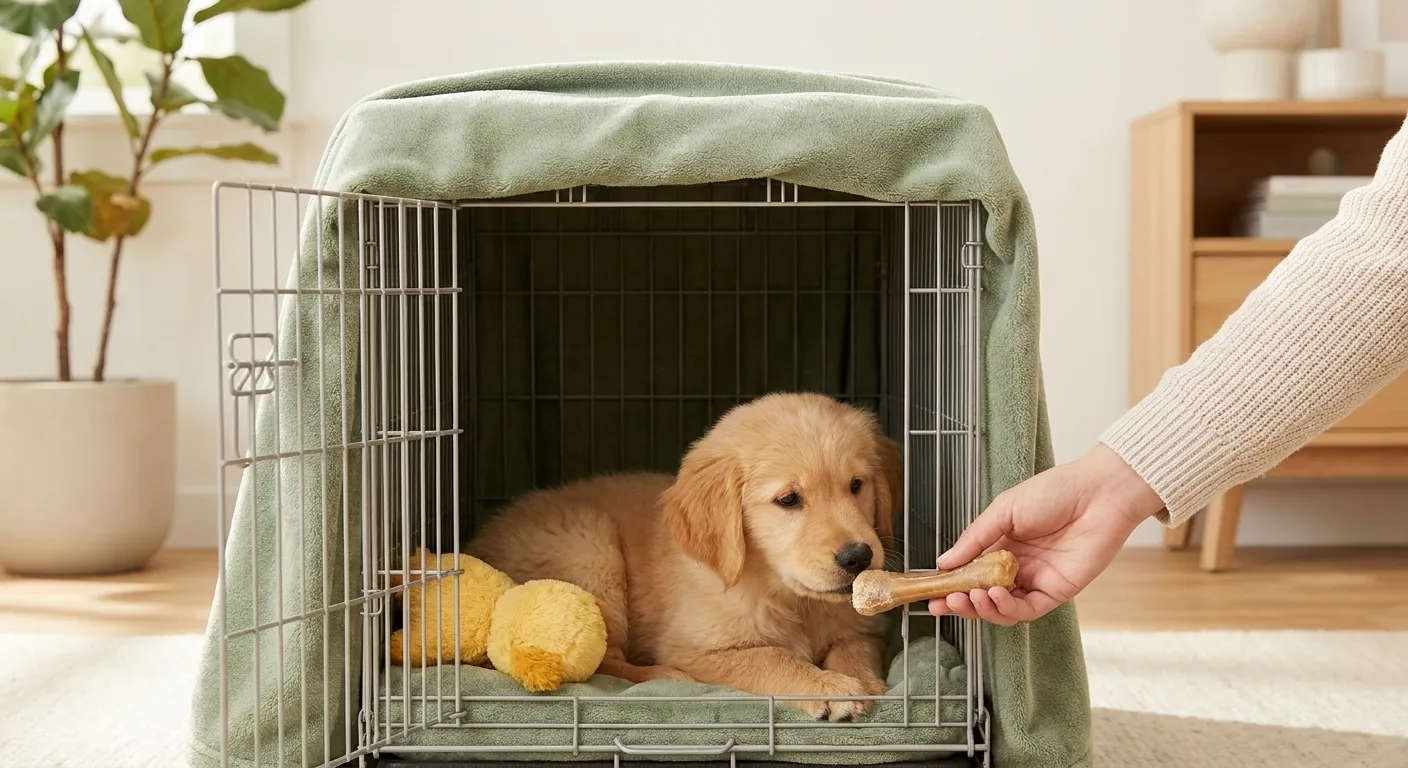
For many new puppy owners, the idea of crate training puppy can bring mixed feelings. Some worry it’s unfair or cruel, imagining a puppy locked away. However, when done correctly, a crate becomes much more than a cage; it transforms into a safe, cozy den that your puppy loves. It’s a powerful tool for potty training, managing destructive behaviors, and providing a secure space for your pup when you can’t supervise them directly. Let’s explore how to make the crate a positive experience for your furry friend.
Why Crate Training Your Puppy is Beneficial
Understanding the natural denning instinct of dogs helps us appreciate the crate’s purpose. Dogs are naturally den animals, seeking small, secure spaces where they feel safe and protected. A crate fulfills this instinct. Beyond comfort, crate training offers several practical benefits:
- Potty Training Aid: Puppies are reluctant to soil their sleeping area, making the crate an excellent tool to teach bladder control.
- Safety: It prevents your puppy from chewing on dangerous items or getting into trouble when you’re busy or away.
- Security: Provides a personal retreat for your puppy during stressful situations, like visitors or loud noises.
- Travel and Vet Visits: Makes travel and vet stays less stressful for your puppy as they are accustomed to a confined space.
Making the Crate a Happy Place
Introducing the crate positively is crucial. Start by making the crate inviting with a soft blanket or bed and a favorite chew toy. Leave the door open and let your puppy explore it at their own pace. Never use the crate as punishment. Feed meals inside the crate with the door open, then gradually close it for short periods while they eat. Offer high-value treats inside. Extend the time spent in the crate slowly, always ensuring your puppy is comfortable and calm. If they whine, ignore it initially, but if it escalates, they might need a potty break or are not yet comfortable with the duration. Patience and positive associations are your best tools for successful crate training puppy.
Choosing the Right Crate for Your Puppy
Selecting the appropriate crate is the first step towards successful den training. Therefore, consider your puppy’s current size and their expected adult size. A crate should be large enough for your puppy to stand up, turn around, and lie down comfortably. However, it shouldn’t be so large that they can use one end as a bathroom and the other as a sleeping area. Many crates come with a divider, which is incredibly useful. This allows you to adjust the size of the crate as your puppy grows, ensuring it always feels like a snug, secure den rather than an overwhelming open space. Commonly, wire crates offer good ventilation and visibility, while plastic travel crates provide a more enclosed, den-like feel. Consider your home environment and your puppy’s personality when making your choice. For instance, some puppies prefer the privacy of a solid-sided crate.
Setting Up Your Puppy’s Cozy Den
Once you have the right crate, setting it up correctly is essential. Firstly, place the crate in a central, yet quiet, part of your home where your puppy can still feel like part of the family. Avoid isolating the crate in a basement or garage. Next, make it super inviting! Line the bottom with a soft, comfortable bed or blanket. Consider using an old t-shirt with your scent on it; this can provide comfort and familiarity for your puppy. Always include a few safe, durable chew toys to keep them occupied and to help them associate the crate with positive experiences. For example, a Kong filled with peanut butter (xylitol-free!) or frozen treats can be a wonderful distraction and reward. Remember, the goal is to make this space as appealing and comforting as possible. This preparation is key to successful dog crate training.
The First Steps: Introducing Your Puppy to the Crate
Introducing your puppy to their new den should be a gentle, positive process. Never force your puppy inside. Instead, leave the crate door open and let them explore it on their own terms. You can toss a few tasty treats inside to encourage them to enter. When they go in, offer praise and more treats. The initial stages are all about creating positive associations. Furthermore, feed your puppy their meals inside the crate with the door open. As they become more comfortable, you can start closing the door for very short periods while they eat, gradually increasing the duration. It’s important to keep these early sessions brief and positive. If your puppy shows any signs of distress, open the door and try again later. Patience here truly pays off. This gentle introduction is vital for effective puppy crate training.
Gradually Increasing Crate Time
After your puppy is comfortable eating in their crate, you can begin to extend the time they spend inside. This process should always be gradual. Firstly, have your puppy go into the crate, give them a treat, and close the door for a minute or two while you stay nearby. Then, open the door and release them with calm praise. Slowly increase this time, always ensuring your puppy remains calm and relaxed. You can start leaving the room for short periods, returning before your puppy gets anxious. A good strategy is to offer a special toy or treat that they only get when they are in their crate. This helps build a strong positive association. For more guidance on creating positive associations, you might find our article on Positive Reinforcement Training for Better Dog Walks helpful. Remember, the goal is for them to see their crate as a safe, quiet haven. This methodical approach is fundamental to effective crate training puppy.
Crate Training and Potty Training: A Powerful Duo
One of the most significant benefits of crate training is its effectiveness as a potty training aid. Puppies naturally want to keep their sleeping area clean. Consequently, they will typically try to hold their bladder and bowels when they are in their crate. This instinct is what makes the crate such a valuable tool. Schedule regular potty breaks immediately after your puppy wakes up, after eating, and before bedtime. As soon as you let your puppy out of the crate, take them directly to their designated potty spot outside. Praise and reward them enthusiastically when they go. If your puppy has an accident inside the house, avoid punishment. Simply clean it thoroughly and adjust your schedule. This consistent routine will help them learn quickly. Furthermore, understanding Good Dog Behavior Starts at Home can provide broader context for these training efforts. Remember, a successful potty training journey often goes hand-in-hand with diligent puppy den training.
What to Do if Your Puppy Whines in the Crate
It’s normal for puppies to whine or cry a little when they are first getting used to their crate. This can be challenging for new owners, as our natural instinct is to comfort them. However, it’s important to differentiate between a puppy who needs a potty break and one who is simply protesting. If you’ve just taken your puppy out and they’ve had a chance to relieve themselves, a few minutes of whining can often be ignored. Responding immediately to every whine can teach your puppy that crying gets them out of the crate. Instead, wait for a brief pause in the whining before letting them out, if appropriate. If the whining escalates or is prolonged, it might indicate they are genuinely uncomfortable, need a potty break, or aren’t yet ready for that duration. In such cases, gently let them out, take them to their potty spot, and if nothing happens, return them to the crate. Never use the crate as a punishment, as this will undo all your positive efforts. For more insights on managing puppy anxiety, consider reading about Reduce Dog Anxiety for Better Walks. This approach helps build resilience and confidence in their den.
Overnight Crate Training
Overnight crate training is a crucial part of helping your puppy learn bladder control and establish a consistent sleep routine. Place the crate in your bedroom or a nearby area initially, so your puppy can hear and smell you. This proximity provides comfort and reassurance. Before bedtime, ensure your puppy has had a final potty break and has emptied their bladder. Avoid giving water too close to bedtime. When you put them in the crate, offer a comforting phrase and a treat. If your puppy whines in the middle of the night, it’s important to take them out for a quick, no-fuss potty break. Do not engage in play or give too much attention; keep it strictly business. Once they’ve relieved themselves, quietly return them to their crate. As they get older and their bladder control improves, they will be able to hold it for longer periods. This consistent routine will help you both get a good night’s sleep. Learning to navigate these challenges can help you become a Confident Dog Parent.
When to Use the Crate (and When Not To)
The crate should be a safe haven, not a place of punishment or prolonged confinement. Use the crate when you cannot actively supervise your puppy, such as when you’re busy with household chores, working, or stepping out for a short period. It’s also excellent for nighttime sleep and when your puppy needs a quiet retreat from household commotion. For example, during a dinner party or when children are playing rambunctiously, the crate offers a safe space. However, avoid using the crate for excessively long periods. A young puppy should not be crated for more than a few hours at a time, as they need frequent potty breaks and opportunities for exercise and socialization. Never use the crate as a punishment; this will create negative associations and make your puppy fearful of it. The goal is always for your puppy to view their crate as a positive, comfortable space. This careful consideration ensures successful crate training puppy.
Addressing Common Crate Training Challenges
Even with the best intentions, you might encounter some challenges during crate training. Some puppies might resist going into the crate, while others may whine excessively. If your puppy is reluctant, try making the crate even more appealing with higher-value treats or a favorite toy. You can also try feeding all their meals in the crate for a few days. If excessive whining occurs, first rule out the need for a potty break. If they’re just protesting, try to ignore it for short periods, but don’t let them become overly distressed. Gradually build up their tolerance. For puppies experiencing signs of distress or separation anxiety, it’s crucial to proceed with extra care. You might find our article on Severe Separation Anxiety Signs Every Owner Should Know helpful in understanding and addressing these deeper issues. Consulting with a professional dog trainer can also provide personalized guidance if you’re struggling. Remember, every puppy is unique, and some may take longer to adjust. Patience is your greatest ally in puppy den training.
The Long-Term Benefits of Crate Training
Successful crate training puppy offers lasting benefits for both you and your furry friend. A well-crate-trained dog has a secure place to retreat to, which can significantly reduce stress in various situations. For example, vet visits become less daunting when your dog is comfortable in a carrier. Travel is also much smoother, whether it’s a short car ride or a longer trip. Furthermore, a dog that is comfortable in their crate is less likely to develop destructive behaviors when left unsupervised, providing you with peace of mind. It also instills a sense of structure and routine, which many dogs thrive on. Ultimately, crate training fosters a sense of security and independence in your dog, contributing to a calmer, happier household. This investment in early training truly pays off for years to come. For more on building healthy routines, check out Stress Free Dog Habits for a Happier Life. For additional external resources, the Humane Society offers excellent guidelines on crate training, and the American Kennel Club also provides valuable advice on how to crate train a puppy.
Conclusion
Crate training is a loving way to provide your puppy with security, structure, and safety. By approaching it with patience and positive reinforcement, you’ll soon find that your puppy not only tolerates their crate but considers it their cherished personal space, offering peace of mind for both of you. It’s a journey that requires understanding and consistency, but the rewards of a well-adjusted, confident companion are immeasurable. Embrace this process, and watch your puppy thrive in their cozy den.
FAQ: Common Questions About Puppy Den Training
How long can a puppy stay in a crate?
The duration depends on their age. Young puppies (8-10 weeks) can generally only hold it for 1-2 hours. Puppies 10-12 weeks old can manage 3-4 hours. As they get older, their bladder control improves, but ideally, an adult dog shouldn’t be in a crate for more than 4-5 hours during the day without a break. Always ensure frequent potty breaks, especially for young pups.
What kind of crate is best for a new puppy?
Many new owners choose a wire crate with a divider. This allows you to adjust the size as your puppy grows, ensuring it’s always snug enough to discourage accidents but large enough to stand and turn around comfortably. Plastic travel crates also work well for a more enclosed, den-like feel.
Should I put water in my puppy’s crate?
Generally, it’s best to remove water bowls from the crate, especially overnight, to prevent accidents. Ensure your puppy has access to fresh water frequently when they are out of the crate. For very long crating periods (which should be avoided for young puppies), you might consider a water bottle attached to the crate side, but monitor it closely.
Is it okay for my puppy to cry in their crate?
A little crying or whining at first is normal as your puppy adjusts. It’s important to distinguish between needing a potty break and simply protesting. If you’ve just taken them out, try to ignore short periods of whining. However, if the crying is prolonged, frantic, or sounds distressed, they might be genuinely uncomfortable or need to go out. Never use the crate as punishment.
How can I make the crate a comfortable place for my dog?
Make the crate inviting with a soft bed or blanket and safe, durable chew toys. Feed meals inside the crate and offer high-value treats when they enter. Never force your puppy in. Gradually increase the time they spend inside, always associating it with positive experiences. Consistency and patience are key to creating a happy, cozy den.

