
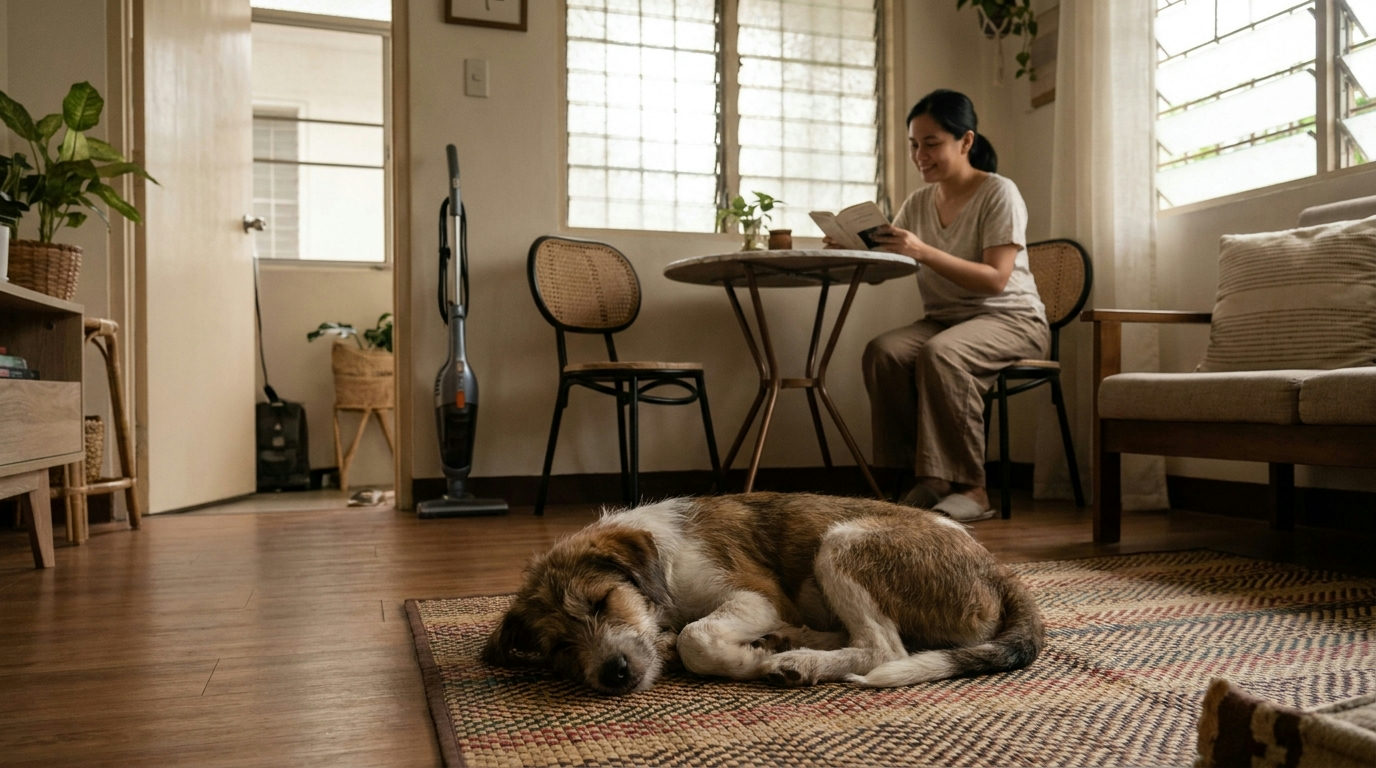
A vacuum in the next room, a door closing, or a phone ringtone may be ordinary to you and new to a puppy. Helping your puppy hear new household sounds calmly begins with observation and choice. You do not need to turn every appliance on at once or wait for a loud event. Start with a quiet, predictable sound at a level your puppy can comfortably notice, then see how they respond. The American Kennel Club’s home socialization guide includes everyday noises among the experiences owners can introduce positively. This guide focuses on a gentle routine at home.
Who this is for: New puppy owners exploring everyday indoor sounds with a puppy who is otherwise comfortable at home. This is general behavior guidance, not a diagnosis. If your puppy has intense fear, pain, or a sudden change in behavior, speak with your veterinarian and a qualified reward-based behavior professional.
A quick plan for a new sound
- Choose one sound and a place where the puppy can move away.
- Begin softly or at a distance rather than at full intensity.
- Watch the puppy’s response before changing anything.
- Pair a comfortable experience with praise, play, or an appropriate treat.
- Stop before the puppy becomes overwhelmed and try an easier step next time.
Why household sounds belong in socialization
Socialization involves more than meeting people and dogs. The AKC socialization overview discusses sights, sounds, smells, and surfaces as part of helping puppies meet their environment in a positive way. Your own home offers many examples, including appliances, footsteps, keys, and doors. You can choose the time, lower the intensity, and avoid adding a crowd. That makes it easier to learn which sounds your puppy already handles well and which deserve a slower introduction.
The goal is not to guarantee that a puppy will never startle. A sudden noise can surprise anyone. What matters during practice is whether the puppy can notice a manageable sound and remain able to relax, explore, or take a break. Avoid treating a sound list as a race. One calm experience with a quiet vacuum in another room can be more useful than several loud sounds packed into one session.
Choose a sound you can control
Begin with an ordinary sound whose timing and volume you can manage: a low phone ringtone, a door closing gently, or a vacuum far from the puppy. Check that the puppy has a familiar place to rest and a clear path away. If the puppy is already tired, eating, or coping with visitors, wait for a calmer moment. Let one person handle the sound while another observes the puppy. Keep the first attempt brief and simple.
For a vacuum, you might first let the puppy see the appliance while it is off. If the puppy is comfortable, move it slightly without turning it on. Later, run it in another room for a short period while the puppy can remain at a distance. This is an example rather than a required ladder. If the puppy is worried at the first step, go back to a quieter or more distant version. Do not chase the puppy with the machine or block the route out.
Watch the puppy before you raise the volume
Observe the whole puppy rather than one signal. Can they move freely, sniff, and return to a familiar activity? Or do they freeze, retreat urgently, or seem unable to settle? If the puppy is worried, lower the sound, increase distance, or stop. The AKC guide advises watching for signs of stress during positive noise exposure. You do not need to keep playing a recording until the puppy “gets used to it.”
Note what happened in plain language: “heard the door close from the kitchen and kept chewing,” or “moved behind the sofa when vacuum started.” These details help you choose the next step. If the sound came unexpectedly and the puppy startled, make the area calm again. You can work on a controlled, gentler version later. Do not scold a puppy for being afraid.
Use rewards while the puppy is comfortable
Praise, a familiar toy, or an appropriate treat can help make a new sound part of a positive experience. The AKC puppy socialization guide emphasizes making introductions positive. Offer a reward when the puppy is at ease enough to engage. If the puppy will not take a normally welcome treat or wants to leave, give them space instead of using food to lure them toward the noise.
Keep rewards simple and suited to your puppy’s diet. Ask your veterinarian if you are unsure what treats are appropriate. Not every comfortable response needs a formal cue. You can praise quietly and let the puppy continue playing. The sound should be a background part of an ordinary day, not a dramatic event staged by several excited people.
Build a small routine across days
On the first day, choose one sound and one easy location. On the next day, repeat only if the puppy was comfortable. After several calm experiences, you might make one modest change, such as a little less distance or a different room. Do not increase duration, volume, and proximity at the same time. The schedule should adapt to the puppy, not the calendar. If one day is harder, return to an easier step.
Household members should agree on the plan. If one person is introducing a quiet doorbell sound, another should not suddenly run the vacuum next to the puppy. A short note on the fridge or phone can help: sound, distance, puppy response, and next easy step. This prevents accidental repetition at a level that was already too difficult. Keep normal rest times free from practice.
What about sounds you cannot control?
Traffic, thunder, construction, or neighbors may not arrive on your schedule. You can still give the puppy a familiar, quieter place to retreat and reduce extra stimulation. For severe distress, ask your veterinarian or a qualified behavior professional for individual help. Do not try to copy a recording routine that is too intense for your puppy. The goal is to support the puppy in front of you, not to prove that every sound can be handled alone.
If you use recordings for practice, start at a very low level and watch the response. A recording may not feel exactly like the real event, so treat it as one controlled experience rather than a guarantee. The AKC home guide mentions sounds that can be practiced from home, while stressing positive experiences and attention to stress. A puppy who is comfortable with a low recording still deserves support during a real storm or noisy evening.
Keep sound practice separate from other new things
If the puppy is exploring a new floor, meeting a visitor, or learning a harness, avoid adding a loud appliance to the same moment. Change one part of the environment at a time. This helps you see what the puppy is responding to. You can use a familiar mat or resting spot as a place to choose during sound practice, provided it remains optional. For another gentle home exercise, see the guide to new surfaces.
Do not ask the puppy to perform commands through fear. If they cannot respond as usual, make the situation easier. The AKC’s caution against forced socialization applies here too: a puppy should not be pushed through a frightening experience just to complete a list. Calm progress may be slow and still valuable.
When to seek individual advice
Talk with your veterinarian if fear is intense, appears suddenly, or comes with other health concerns. A qualified reward-based trainer or behavior professional can help design steps for a specific sound and puppy. Bring simple notes about what the sound was, how far away it was, what your puppy did, and what helped them settle. Avoid broad labels such as “stubborn” or “bad with noise”; observations are more useful.
Helping your puppy hear new household sounds calmly is a series of small choices. Begin with one manageable sound, allow distance and escape, reward comfort, and stop when the puppy needs a break. A quiet, predictable home session is a good place to practice patience alongside your puppy.
Common questions
Should I turn the vacuum on next to my puppy?
Begin with the appliance off or at a distance. Increase only when the puppy is comfortable, and keep an exit route open.
What if my puppy runs away?
Let them reach a safe place. Lower or stop the sound, and plan an easier introduction later. Seek individual help if fear persists.

