
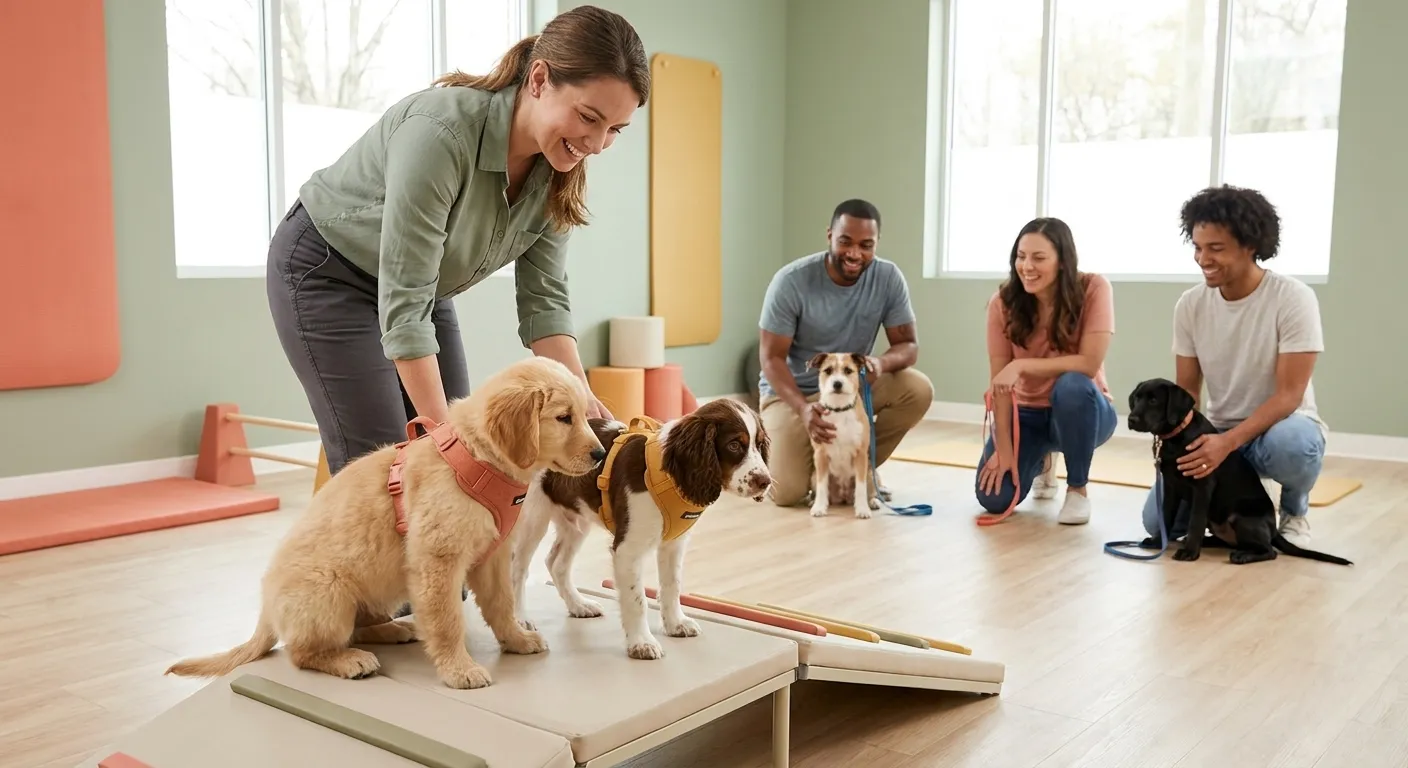
Bringing home a new puppy is incredibly exciting, yet it can also feel a bit overwhelming, especially when you consider all the new experiences they need to encounter. Thankfully, one of the most effective ways to ensure your furry friend blossoms into a confident, well-adjusted adult is through puppy socialization classes. If you’re a first-time owner feeling a little lost about where to begin, you’ve certainly come to the right place. These structured sessions offer a safe, controlled environment for your puppy to acquire crucial social skills, meet new dogs and people, and build confidence away from the familiar comforts of home.
Why Puppy Socialization Classes Matter So Much
Many new owners understandably wonder if these classes are truly necessary, particularly with so much conflicting advice available online. However, the truth is, early socialization is absolutely vital for preventing future behavioral challenges such as fearfulness or aggression. In a thoughtfully organized class, your puppy will be gently exposed to various sights, sounds, and positive interactions with other puppies and people. All of this occurs under the watchful eye of an experienced instructor. This guided exposure helps them develop a positive association with new experiences, thus laying a strong foundation for their future well-being. It’s not merely about playful romps; rather, it’s about structured learning and positive reinforcement that profoundly shapes their understanding of the world around them.
Choosing the Right Program for Your Puppy
When you’re searching for puppy socialization classes, it’s wise to consider a few key factors. First and foremost, ensure the class explicitly prioritizes positive reinforcement methods. You should always avoid any class that employs harsh corrections or fear-based training techniques. Look for small class sizes, as this ensures individual attention for each puppy. Furthermore, a clean, safe, and stimulating environment is paramount. Don’t hesitate to ask about the instructor’s qualifications and their relevant experience. A truly beneficial class will also provide valuable opportunities for you, the owner, to learn about puppy behavior, effective training techniques, and how to seamlessly continue socialization at home. Remember, the ultimate goal is to nurture a confident puppy, and the right class can be an invaluable tool in your journey as a pet parent.
Understanding the Benefits of Early Puppy Socialization
Early socialization is a critical window in a puppy’s development, typically between 3 and 16 weeks of age. During this period, puppies are most receptive to new experiences and are less likely to develop fears. Attending puppy training classes during this time helps them learn that the world is a safe and exciting place, not something to be feared. They learn appropriate play behaviors, bite inhibition from interacting with other puppies, and how to calmly handle novel situations. This foundational learning is incredibly important for their long-term emotional health and their ability to adapt to various situations throughout their lives. Furthermore, it helps prevent common issues like separation anxiety and leash reactivity, which can be challenging to address later on.
Think of these early experiences as building blocks for your puppy’s personality. Positive interactions now can prevent significant behavioral hurdles down the road. For instance, a puppy who regularly meets new people in a controlled setting is less likely to be shy or fearful of strangers as an adult. Similarly, exposure to different types of dogs teaches them how to communicate effectively within the canine world. This is why well-structured puppy classes are so impactful.
What to Expect in a Typical Puppy Socialization Class
So, what actually happens in a puppy socialization class? Typically, a class will involve a mix of supervised playtime, short training exercises, and opportunities for puppies to experience new sounds, textures, and objects. The instructor will guide puppies and owners through various scenarios designed to build confidence. For example, puppies might walk over different surfaces, hear unexpected noises at a low volume, or be gently handled by different people. This gradual exposure helps them generalize positive responses to a wide range of stimuli. Moreover, instructors often provide valuable insights into common puppy behaviors, offering solutions for nipping, house-training, and crate training. You’ll also learn how to read your puppy’s body language, which is essential for understanding their needs and ensuring positive interactions.
The supervised playtime is particularly beneficial. Puppies learn crucial social cues from each other, such as when a playmate wants a break or how to initiate play appropriately. The instructor will carefully monitor these interactions, stepping in if play becomes too rough or if a puppy is feeling overwhelmed. This ensures that every puppy has a positive and safe experience, fostering healthy social development. It’s a fantastic environment for both puppies and owners to learn and grow together.
Finding the Best Puppy Socialization Classes Near You
Finding the right training for your new companion can feel like a quest. To begin your search for quality puppy classes, start by asking your veterinarian for recommendations; they often have reliable local contacts. You can also search online for
Related reading:

